

Is Your Office a Time Machine? How to Make a Multigenerational Workforce Actually Work.
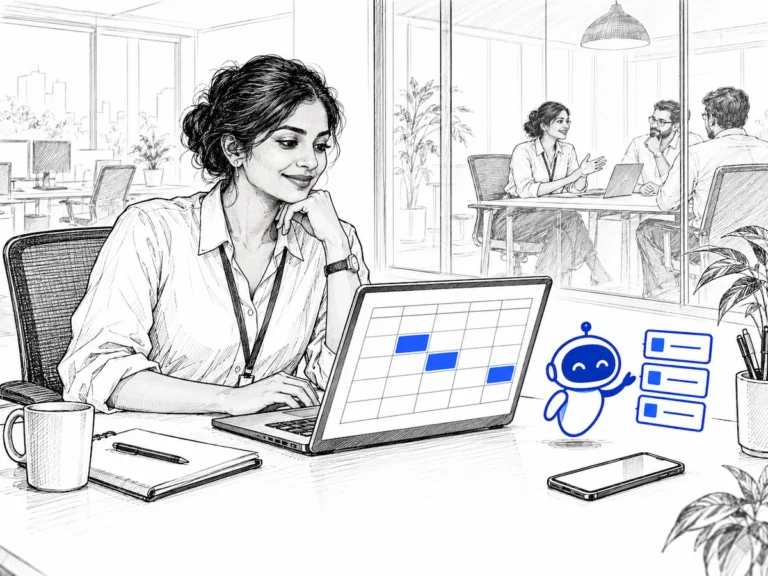
Priya has been with the company for 28 years. She knows every client by name, every process by heart, and every shortcut that is not in any manual. On Monday morning, she prints her to-do list, marks it with a pen, and gets to work.
Beside her sits Kabir, two years out of college, who cannot understand why anyone would print anything. He tracks everything on Notion, communicates in voice notes, and has already suggested three new tools in his first month that nobody has tried yet.
Neither of them is wrong. But if their manager does not know how to handle both of them well, the team loses the best of both.
This is the reality of a multigenerational workforce. For the first time in history, most Indian organizations have four generations sharing the same office, the same Zoom calls, and sometimes the same frustrations.
Why the Friction Happens
The tension between generations at work is rarely about age. It is about communication styles, assumptions, and what each person believes good work looks like.
A Boomer who sends a detailed email expects a detailed reply. A Gen Z employee reads the same email on their phone and replies in two lines, not because they are being disrespectful, but because that is how they communicate effectively. Neither person is communicating badly. They are just communicating differently.
Similarly, a Gen X manager who values independence and self-sufficiency may read a Millennial’s need for regular feedback as insecurity. The Millennial reads the silence as indifference. Both walk away frustrated from a conversation that never actually happened.
These misreads compound over time. What starts as a small friction point, camera on versus camera off, formal email versus WhatsApp message, structured hierarchy versus flat collaboration, builds into a team that functions in silos without anyone intending it.
What Each Generation Actually Brings
Instead of managing generational differences as problems, the most effective leaders treat them as a mix of resources.
Traditionalists and Boomers bring institutional knowledge that no onboarding program can replicate. They have seen market cycles, organizational changes, and client relationships that newer employees simply have not had time to accumulate. Losing them without knowledge transfer is one of the most expensive mistakes a growing company can make.
Gen X employees tend to be pragmatic, self-reliant, and comfortable with ambiguity. In a startup or rapidly changing environment, this is exactly the operating style you need in a mid-level leader.
Millennials bring collaboration instincts and a genuine orientation toward purpose. They ask, “Why are we doing this?” not to challenge authority, but because the answer to that question affects how hard they will work and how long they will stay.
Gen Z employees have grown up with more information, more choices, and more uncertainty than any previous generation. They value clarity, authenticity, and a direct line between their work and its impact. They also bring digital fluency that most organizations have not yet figured out how to fully use.
The Strategy That Actually Works: Reverse Mentoring
Most mentoring goes in one direction, senior to junior. The experienced person shares wisdom, the younger person absorbs it. This is valuable, but it leaves half the equation untapped.
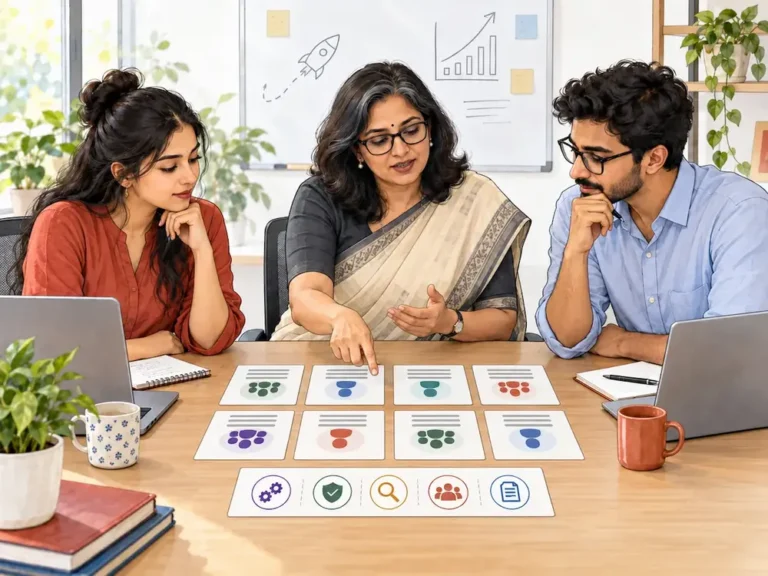
Reverse mentoring flips the model. A 26-year-old teaches a 52-year-old how to use LinkedIn effectively for business development. The 52-year-old teaches the 26-year-old how to navigate a difficult client conversation or structure a high-stakes presentation. Both walk away with something they did not have before.
However, reverse mentoring only works when the senior person approaches it without ego, and the junior person approaches it without assumptions. Therefore, it requires deliberate design pairing, structure, and a shared understanding of what both people are there to learn.
What Leaders Need to Do Differently
Managing a multigenerational workforce well does not require a workshop or a generational diversity initiative. It requires a few specific shifts in how leaders show up daily.
First, stop assuming that your communication preference is the default. If you prefer long emails, say so, but also ask how the other person communicates best and meet them halfway. Second, make expectations explicit. What counts as a quick response? What does accountability look like on this team? What does a good meeting look like? These seem obvious until you realize that four generations have four different answers. Third, create opportunities for generations to work together on real problems, not just team-building exercises. Shared work builds understanding faster than any off-site activity.
What We See in Indian Organizations
In India specifically, the multigenerational dynamic carries additional layers. Hierarchy is deeply embedded in many workplace cultures, which can make it harder for younger employees to challenge ideas or offer feedback upward, even when that feedback is exactly what the organization needs. At the same time, older employees sometimes read younger colleagues’ directness as a lack of respect, when it is simply a different cultural orientation toward communication.
The companies that handle this well create psychological safety across levels where a 24-year-old can tell a 50-year-old that a process is not working, and the 50-year-old takes it seriously instead of personally.
Where Excellential Comes In
At Excellential, we work with organizations to build the conditions where a multigenerational workforce stops being a management challenge and starts being a competitive advantage. Our work includes structured reverse mentoring programs, communication style workshops, and leadership development for managers who are navigating teams with significant generational spread.
The potential is already in your team. The question is whether your culture is set up to use it.
Explore our Generational Synergy Workshop or write to us at support@excellential.com to start the conversation.