

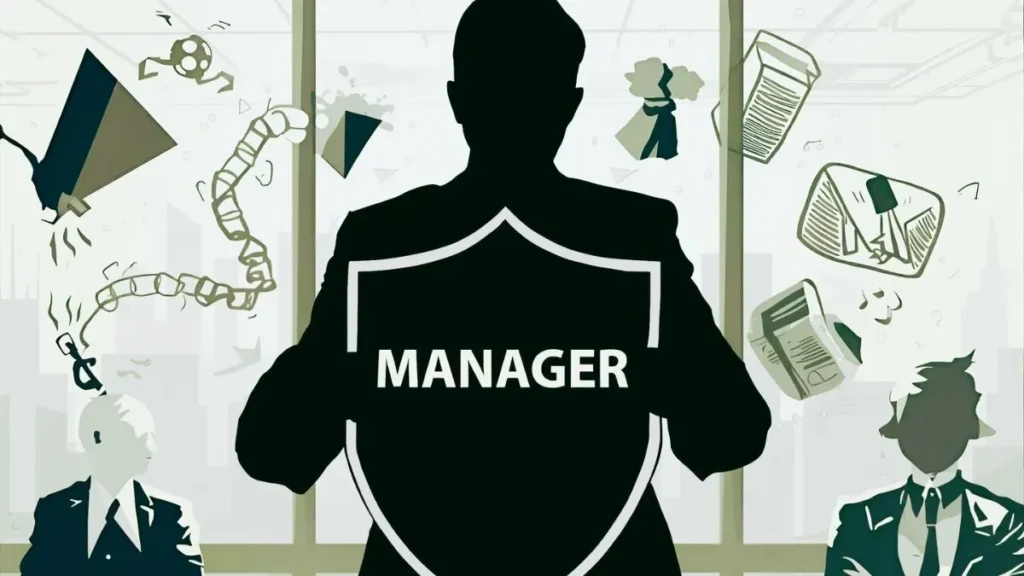
Why first-time manager training matters more than the promotion email: a story about Arjun, his team, and what changed after 90 days.
Meet Arjun.
Last month, he was a star sales rep. This month? He’s a terrified new manager holding his first team meeting.
“So… great job, everyone,” he mumbles to his former peers. “Keep…doing that?”
His team exchanges glances. One rolls her eyes so hard Arjun worries she might injure herself.
Arjun’s story plays out in offices across Bengaluru, Mumbai, Pune, and Gurugram every quarter. The pattern is so common it has a name: the accidental manager. India’s IT, BFSI, manufacturing, and startup sectors promote thousands of high-performing individual contributors into people-management roles every year. Most are handed a new title, a slight CTC hike, and a Slack message that says “Congratulations.” Very few are given the one thing that actually matters: structured first-time manager training.
Why First-Time Managers Need More Than a Promotion Email.
Arjun’s week from hell
- Monday: Delegated a task by forwarding an email with “Pls handle.”
- Wednesday: Gave “constructive feedback” that left his top performer in tears
- Friday: Promised the moon to motivate his team (“Year-end bonuses…maybe?”)
By week two, his team was plotting mutiny.
Arjun isn’t lazy or unintelligent. He was an excellent sales rep; that’s exactly why he got promoted. But selling and managing are different jobs. One uses your individual skill. The other uses everyone else’s. This is exactly why the best performers struggle as managers, and nobody has ever shown Arjun how to make that switch. He had read three books on management. He had bookmarked an HBR article on becoming the boss. None of it stuck because reading about management is not the same as learning to manage, and most leadership training fails for exactly this reason.
The Turning Point: When Real First-Time Manager Training Arrived
Three months in, Arjun’s VP recommended Excellential’s first-time manager training program. It wasn’t a one-day seminar or a webinar he could half-watch with his email open. It was structured, role-play heavy, and built specifically for Indian workplace dynamics where hierarchy, face-saving, and the awkwardness of managing former peers all collide.
Here is what Arjun actually learned:
Enter Excellential’s First-Time Manager Bootcamp – where Arjun learned:
1. The Delegation Dance
-
- Old way: Dump work on others
- New way: “Here’s the why, here’s the support, now you own it.“
The shift sounds simple. In practice, it requires unlearning years of “if I want it done right, I’ll do it myself” thinking. Most first-time managers in India hit this wall because the cultural instinct is to overperform individually rather than build a capable team.
2. Feedback That Doesn’t Backfire
-
- The “Oreo Method”: Good news → growth area → encouragement. Your client calls are stellar! Let’s work on follow-ups. Your potential is huge!”
The harder skill: giving feedback to a former peer. The teammate who was your colleague last month now reports to you. Excellential’s training covers the specific phrasing that works in Indian workplaces, direct enough to be useful, respectful enough to preserve the relationship.
3. Motivation Beyond Pizza Parties
-
- Spotting burnout before the 3rd “sick day” in a row
- Custom growth paths for each team member
Real motivation comes from understanding what each person on your team actually wants from their career, not what HR’s engagement survey says.
90 Days Later…
Arjun’s team:
- Delivered 130% of quota
- Actually, smiles in meetings
- Stopped updating their LinkedIn profiles daily
His secret? “I stopped pretending I had all the answers and started helping my team find theirs.”
Arjun’s Story Isn’t Rare. It’s the Norm.
Every quarter, thousands of high performers across India get promoted into management roles they aren’t trained for. Some figure it out painfully. Many burn out. Others leave the company within 18 months because management felt like a punishment, not a promotion.
The cost is real. For a 50-person team, losing one trained first-time manager to attrition typically costs the organization ₹8-12 lakh in recruitment, onboarding, and lost productivity. Multiply that across the four to six first-time managers most growing companies promote each year, and the unmanaged transition becomes one of the most expensive talent decisions on the books.
Multiply that across the four to six first-time managers most growing companies promote each year, and the unmanaged transition becomes one of the most expensive talent decisions on the books. We’ve shown how a structured leadership pipeline case study can shift this pattern at scale.
The fix isn’t a book recommendation or a one-hour Zoom session. It’s structured first-time manager training that meets new managers where they are confused, slightly panicked, and desperate for a system they can actually use on Monday morning.
Want to give your first-time managers a real shot at succeeding? Explore Excellential’s first-time manager training program built for Indian workplaces, delivered in person or virtually, and field-tested across 85+ organizations.