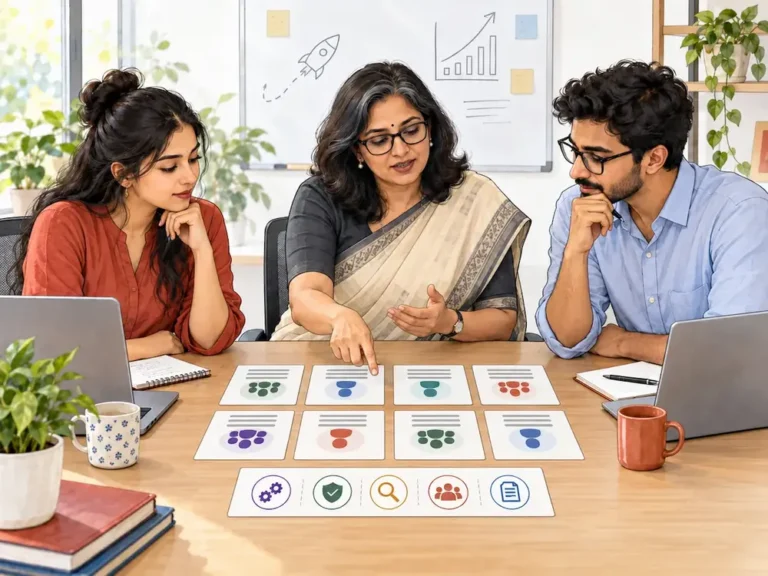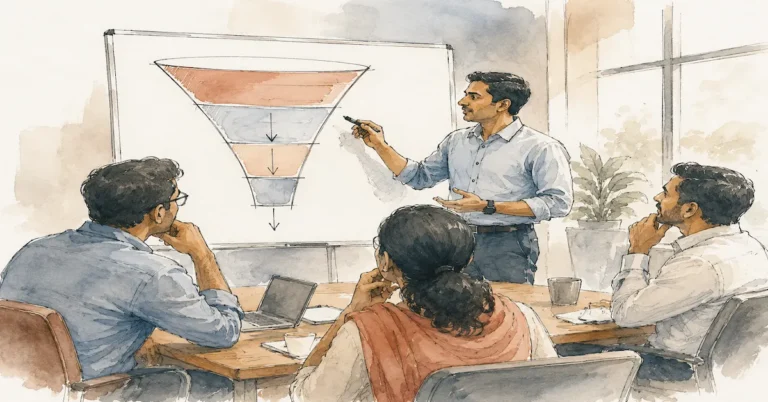

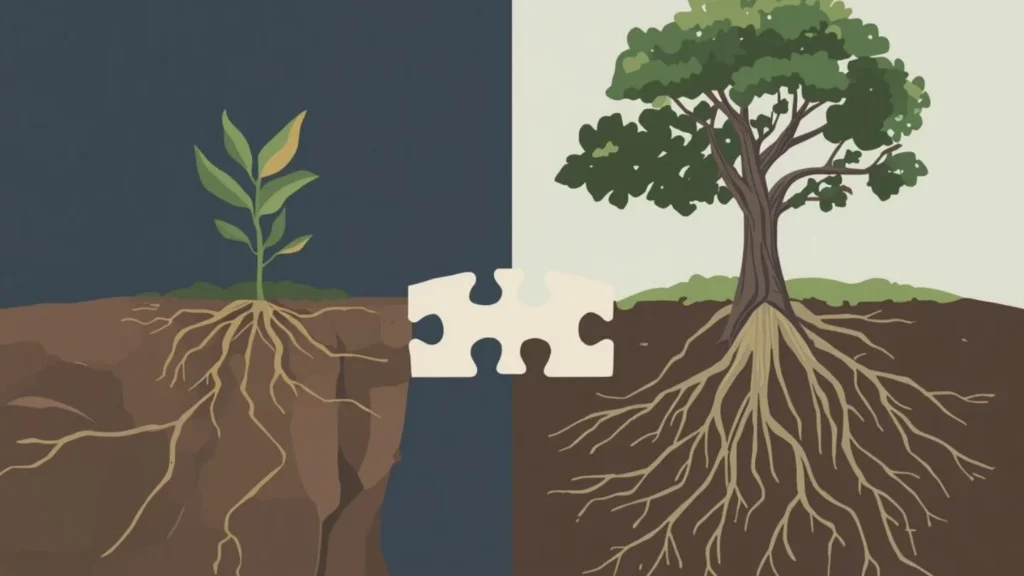
Meera runs L&D for a 2,000-person manufacturing firm near Pune. Last year, she signed off three leadership development programmes: a crisp two-day workshop for new managers, an offsite for senior leaders, and an external certification for high-potentials. The feedback scores were excellent. The photos looked great on LinkedIn. Yet when appraisal season came round, her business heads asked the same question they had asked the year before: why are our managers still avoiding the hard conversations? Meera had delivered training. What the business wanted was change.
Most organisations invest in leadership development with the best intentions.
- Workshops are designed.
- Programs are launched.
- Leaders attend, participate, and leave feeling inspired.
And yet, months later, the same challenges surface:
- Managers struggle with difficult conversations
- Teams feel disengaged
- Decisions slow down instead of improving
This raises an uncomfortable question many organisations quietly avoid:
Why does leadership development happen so often… but leadership change so rarely?
Leadership development programmes in India are structured efforts to build leaders’ capability through practice, coaching, and feedback applied to real work, not one-off workshops, so that new behaviour actually holds once leaders return to the job.
Key Takeaways
|
Why Leadership Development Matters More Than Ever?
Leadership today is under pressure from every direction.
Leaders are expected to:
- Drive results
- Support people
- Manage change
- Stay human in high-stress environments
The cost of ineffective leadership is no longer invisible. It shows up as:
- Low engagement
- Burnout
- Attrition
- Poor execution
Leadership development isn’t a “nice to have” anymore. It’s a business necessity.
The Common Leadership Development Mistakes Organisations Make
Most leadership development programs fail not because leaders don’t want to grow but because the approach is flawed.
Common mistakes include:
- Treating leadership development as a one-time event
- Using the same program for all leadership levels
- Focusing on concepts instead of behavior
- Measuring participation instead of change
Take the most common mistake: running one programme for everyone. A first-time team lead in Bengaluru and a business head with fifteen years of experience sit in the same room, working through the same slides on influencing skills. One is learning to hold their first difficult conversation. The other is trying to change the culture of a 300-person division. The same content cannot serve both. The new lead leaves overwhelmed, the senior leader leaves under-served, and the organisation still calls it a leadership development programme.
When leadership development isn’t connected to real work, real pressure, and real feedback, it stays theoretical.
This is why so little of it sticks. As ATD reports, only 10 to 20% of what people learn in a typical programme transfers back into day-to-day work.
And leadership remains unchanged.
What Effective Leadership Development Looks Like in Practice?
Leadership development works when it shifts from training to development.
That means:
- Starting with behavioral diagnosis, not assumptions
- Helping leaders understand their impact on people
- Creating safe spaces for reflection and practice
- Reinforcing learning through coaching and feedback
- Linking leadership behavior to business outcomes
Here is what gradual change looks like. Arjun, a newly promoted sales manager in Gurugram, kept solving problems himself instead of coaching his team, the very habit that got him promoted. No workshop fixed that. What worked was smaller and slower: one behaviour to practise each fortnight, a short debrief with his manager, and a feedback loop that tracked how his team responded. Four months in, his people were bringing him decisions instead of problems. That is leadership development doing its actual job, changing behaviour in the flow of real work.
Real leadership growth is gradual.
It happens through small, consistent shifts, not dramatic interventions.
A Deeper Look: Why Leadership Programs Fail (And What Finally Makes Them Work)
- Why inspiration fades after workshops
- What leaders struggle with once they return to work
- How organisations can redesign leadership development for real-world impact
Leadership Development Is Closely Linked to These Challenges. Leadership challenges rarely exist in isolation. They often show up alongside:
- ‘Employee Engagement.’
When leadership behavior is inconsistent or unclear, engagement quietly drops.
Employee Engagement Is Not an HR Problem; It’s a Leadership One.
- ‘Managerial Effectiveness.’
Managers sit at the center of execution and are often the least supported.
Managerial Development Programs: The Missing Link Between Strategy and Execution
- ‘Leadership Training vs Development.’
Knowing the difference can save organisations years of frustration.
Leadership Development vs Leadership Training: What Organisations Get Wrong.
How Excellential Approaches Leadership Development?
At Excellential, leadership development is designed as a journey, not a program.
Our approach focuses on:
- Contextual leadership challenges
- Behavioral insights
- Practical application
- Measurable impact
We work closely with leaders and organisations to build leadership capability that:
- Feels relevant
- Feels human
- Actually, shows up in daily work
Leadership development shouldn’t feel overwhelming.
It should feel supportive.
If You’re Rethinking Leadership Development
If your organisation is questioning whether leadership development is truly working that’s a healthy sign.
It often means you’re ready to move beyond checklists and toward real capability building. Explore how Excellential designs leadership development programs that are grounded in real behavior, real context, and real outcomes.
This is why our leadership development programmes in India are built around the realities each level actually faces: the first-time manager learning to delegate, the mid-level leader building a bench, the senior leader changing how a function works. We start with what gets in the way on the job, then build the practice, coaching, and reinforcement that make new habits hold. You can see how this comes together in our emerging leaders programme and our first-time manager training.
Explore Excellential’s Leadership Development Programs.
Frequently Asked Questions
What are leadership development programmes?
Leadership development programmes are structured efforts to build leaders’ capability through practice, coaching, and feedback applied to real work. The best ones treat development as an ongoing process rather than a one-off workshop, so that new behaviour holds once leaders return to the pressures of the job.
Why do most leadership development programmes in India fail?
Most fail because they deliver training, not change. Organisations treat development as a single event, use the same programme for every level, and measure attendance instead of behaviour. Without practice, reinforcement, and manager support, only a small share of the learning ever reaches daily work.
What does an effective leadership development programme look like?
An effective programme starts with behavioural diagnosis, not assumptions. It creates safe spaces to practise, reinforces learning through coaching and feedback, and links new behaviour to business outcomes. Change is gradual, built through small, consistent shifts applied to real situations over months, not a single dramatic intervention.
What is the difference between leadership training and leadership development?
Training is an event that transfers knowledge; development is a process that changes behaviour. A workshop can teach a manager what to do, but development builds the habit through practice, coaching, and reinforcement over time. Organisations that confuse the two invest in awareness and wonder why nothing changes.
How do you measure the success of a leadership development programme?
Measure behaviour change and business outcomes, not attendance or feedback scores. Track what leaders actually do differently on the job, how their teams respond, and whether engagement, retention, and execution improve. If you only count participation, you are measuring activity, not the change the programme was meant to create.