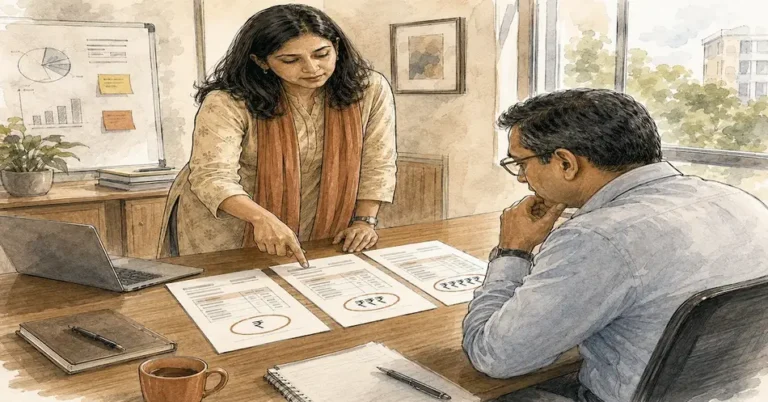


Priya manages a team of nine from her flat in Indiranagar, Bengaluru.
Her developers sit in Pune. Her design lead works from Jaipur. Her QA analyst logs in from Kochi. On paper, the team is distributed. In practice, Priya runs her remote team like it’s still 2019, when everyone sat in the same open-plan office, and she could tap someone on the shoulder for a status update.
Last quarter, two people resigned. The exit interviews said the same thing: “I didn’t feel seen.” Leading remote teams in India has become one of the most common and most mishandled management challenges since the pandemic.
Priya isn’t a bad manager. She’s a good one operating with bad defaults. And she’s not alone.
Since the pandemic forced India Inc. into remote and hybrid work, the model has stuck. According to multiple industry surveys, a significant portion of Indian knowledge workers now operate in some form of distributed setup. But most Indian managers were never trained for this reality. They were trained to manage attendance, not outcomes. To supervise presence, not build trust at a distance.
I’ve worked with over 60 organisations across India, from IT services companies in Hyderabad to D2C startups in Mumbai to manufacturing firms in Coimbatore undergoing digital transformation. And I keep hearing the same confessions from managers who lead remote teams.
Here are seven of them and what actually works instead.
Leading remote teams in India is the practice of managing distributed employees across cities and time zones through trust, clear outcomes, and asynchronous communication, rather than the attendance-and-presence habits most Indian managers were trained on.
Key Takeaways
|
Confession #1: I schedule back-to-back meetings because that’s the only way I know my team is working.
This one comes up in almost every leadership workshop I run.
The manager’s logic sounds reasonable: “If I can’t see them, I need to hear them.” So, the calendar fills up with daily standups, weekly reviews, mid-week check-ins, and ad hoc “quick syncs” that are never quick.
The team, meanwhile, has no time left to do the actual work.
What works instead: Shift from synchronous surveillance to asynchronous accountability. Set clear deliverables with deadlines. Use a shared project board, even something as simple as a Google Sheet, where progress is visible without a meeting. Reserve live calls for problem-solving, not status reporting. If your standup is just people reading their to-do lists aloud, that’s not a meeting. That’s a podcast nobody asked for.
A good rule of thumb: if the update can be typed in three sentences, it doesn’t need a 30-minute call.
Confession #2: I reply to messages at 11 PM and expect my team to be available too.
A team lead at an ed-tech company in Noida told me this with a sheepish grin. “I know I shouldn’t,” he said. “But if I’m online, I just… ping people.”
In an Indian work culture where hierarchy runs deep, a manager’s late-night message isn’t just a message. It’s an unspoken expectation. The team reads it as: “You should be online too.”
Over time, this erodes boundaries. People stop logging off. They start resenting the job, not because of the work, but because the work never ends.
What works instead: Set explicit “communication hours” for your team. If you like working at 11 PM, that’s your choice, but schedule your messages to send during working hours. Most tools (Slack, Teams, even WhatsApp Business) allow scheduled sends. Model the boundary you want your team to follow.
One startup founder I worked with in Bengaluru put it perfectly: “My team doesn’t need a manager who’s always on. They need a manager who’s fully present when it matters.”
Confession #3: I promoted Rahul to lead the remote team because he was our best coder.
This is the “star individual contributor becomes reluctant manager” trap, and it’s everywhere in Indian tech.
Rahul was brilliant at writing code. So, when the team went remote, leadership assumed he’d be brilliant at leading a team that writes code. Managing people across cities, across time zones, across varying levels of motivation requires a completely different skill set.
Rahul didn’t know how to give feedback on a video call. He didn’t know how to onboard a new hire he’d never met in person. He didn’t know how to spot burnout through a screen. Within six months, he was burning himself out.
What works instead: Separate the promotion track from the management track. Not every great performer wants to manage people, and not every great performer should. If you must move someone into a people-leader role, invest in a structured transition: pair them with a mentor, enroll them in a program that teaches remote leadership specifically, and permit them to say, “I’m still learning.”
If your organisation doesn’t have a first-time manager program, that’s not Rahul’s problem. That’s a leadership pipeline gap.
Confession #4: I treat my Pune team and my Bengaluru team differently, and everyone knows it.
Hybrid setups create a dangerous trap: proximity bias. The people who sit near you physically or on the org chart get more attention, better projects, and faster promotions.
One HR head at a mid-sized IT services firm in Chennai shared anonymised engagement data with me. Remote employees rated “visibility to leadership” a full 1.8 points lower than in-office employees on a 5-point scale. That’s not a gap. That’s a canyon.
What works instead: Audit your own behaviour. In the last month, who got the high-profile assignment? Who did you recommend for the cross-functional project? If the answer is disproportionately “the people I see in person,” you have a proximity bias problem.
Fix it structurally: rotate project leads regardless of location. Hold all meetings on video, even if three people are in the same office, so remote members aren’t the odd ones out. Make “remote-first” your default, not “remote-tolerated.”
Confession #5: Our onboarding for remote hires is basically ‘here’s your laptop, good luck.
A product manager at a Pune-based SaaS company told me their remote onboarding consisted of an IT setup call, a shared Google Drive link, and a vague “reach out to anyone if you have questions.”
Three weeks later, the new hire still didn’t know who to ask about leave policy.
In an office, a new joiner absorbs culture by osmosis, the tea break conversations, the lunch group dynamics, the unwritten rules about when to escalate and when to figure it out yourself. Remote hires get none of this. And in Indian organisations, where so much context is informal and relationship-driven, this gap is even more damaging.
What works instead: Build a 30-60-90-day onboarding plan specifically for remote hires. Assign a “buddy,” not their manager, but a peer who can answer the small questions without judgment. Create a simple onboarding document that answers: Who do I go to for what? What are the team’s communication norms? What does “urgent” actually mean here?
The best remote onboarding I’ve seen was at a 200-person fintech in Mumbai. Every new hire got a “culture kit,” a one-page doc with the team’s inside jokes, favourite Slack channels, and a list of who knows what. It costs nothing to create. It saved weeks of confusion.
Confession #6: I have no idea how to build team culture when we never meet in person.
This one comes with genuine helplessness. The manager isn’t lazy. They just don’t know what “culture” looks like when there’s no office pantry, no team lunch, no cricket match on the conference room TV during the World Cup.
So, they default to the cringeworthy: mandatory fun. Virtual pizza parties (where everyone orders their own pizza and eats it on mute). Forced icebreakers on Monday morning calls. “Tell us one fun fact about yourself” for the fourteenth time.
What works instead: Culture isn’t built in events. It’s built into everyday interactions. How do you start your one-on-ones? Do you ever ask about the person, not just the project? When someone makes a mistake, is the team’s first instinct to blame or to help?
Create rituals, not events. One team I worked with does a “Friday Wins” thread on Slack, where everyone shares one thing that went well that week, no matter how small. Another team starts every Monday call with a two-minute “weekend highlight,” optional, never forced. These small, consistent acts build more trust than any annual offsite.
And if your budget allows one in-person meetup per quarter, invest in it. Two days of face time can fuel three months of remote collaboration. Use that time for relationship-building, not presentations.
Confession #7: I don’t give feedback anymore because it feels weird on a video call.
This might be the most damaging confession of all.
In Indian workplaces, feedback is already awkward. We’re culturally wired to avoid confrontation. Add a screen between the manager and the team member, strip away body language and tone, and feedback becomes something managers avoid altogether.
The result? Performance issues fester for months. By the time the manager finally says something, the team member feels blindsided. “Why didn’t you tell me earlier?” they ask. The honest answer: “Because I didn’t know how.”
What works instead: Build a feedback rhythm that doesn’t depend on big, formal moments. Start small: end every one-on-one with one thing that’s going well and one thing to work on. Use a simple framework: “I noticed (behaviour), and the impact was (result). Here’s what I’d suggest.” Keep it specific, keep it timely, keep it human.
And do it on video, not on chat. Feedback without facial expressions is feedback without empathy. Turn the camera on. Let the person see that you’re saying this because you care, not because you’re ticking a box.
The Real Problem with Leading Remote Teams in India:
Every one of these confessions has the same root cause: managers were handed a remote team without being taught how to lead one.
Indian organisations have invested crores in collaboration tools, Zoom licenses, Slack workspaces, Jira boards, and Monday.com subscriptions. But they’ve spent almost nothing on teaching managers the human skills that make remote teams actually work: trust-building at a distance, asynchronous communication, inclusive decision-making, and feedback without proximity.
The technology was always the easy part. The leadership was always the hard part.
If you’re a manager reading this and recognising yourself in one or more of these confessions, don’t beat yourself up. You weren’t trained for this. But now that you know what’s broken, you have a choice: keep repeating the same patterns or start building new ones.
And if you’re a business leader reading this and recognising your managers in these confessions, the fix isn’t another tool. It’s a structured remote leadership development program built for the way Indian teams actually work today.
At Excellential, we work with organisations across India to build leadership capability that matches the way teams actually work today, distributed, asynchronous, and human. If your managers are struggling with remote teams, let’s talk.
What’s the biggest remote team challenge you’ve faced as a manager?
Frequently Asked Questions
What does leading remote teams in India involve?
Leading remote teams in India means managing distributed employees across cities and time zones through trust, clear outcomes, and asynchronous communication. It replaces the attendance-and-presence habits most Indian managers were trained on with deliberate practices for accountability, inclusion, onboarding, culture, and feedback that work when the team rarely meets in person.
Why do Indian managers struggle to lead remote teams?
Most Indian managers struggle because nobody has trained them for distributed work. They learned to manage attendance, not outcomes, and to supervise presence, not build trust at a distance. Common traps include meeting overload, blurred boundaries, proximity bias toward in-office staff, weak remote onboarding, and avoiding feedback on video calls.
How do you manage a remote team without micromanaging?
Shift from synchronous surveillance to asynchronous accountability. Set clear deliverables with deadlines and make progress visible on a shared board, even a simple Google Sheet. Reserve live calls for problem-solving, not status updates. If an update fits in three typed sentences, it does not need a thirty-minute meeting.
How do you build team culture in a remote team?
Culture in a remote team is built into everyday interactions, not events. Replace mandatory fun with light, consistent rituals like a Friday wins thread or an optional weekend highlight. Ask about the person, not just the project, and meet mistakes with help. One in-person meetup a quarter strengthens months of remote work.
How should managers give feedback to remote employees?
Give feedback in a steady rhythm, not big formal moments. End every one-on-one with one thing going well and one thing to work on. Use a simple frame: I noticed this behaviour, the impact was this, here is what I suggest. Keep it specific and timely, and deliver it on video, not chat.