
Key Takeaways• Culture decks describe values; they do not build the behaviour that lives them. Leaders learn culture from daily actions, not slides. • Leadership behaviour shapes culture in ordinary moments: reactions under pressure, how disagreement is handled, and what leaders choose to ignore. • Most decks fall short because they state values without translating them into behaviour, and because systems reward delivery over how results are reached. • Culture changes when the focus moves from communication to capability: from ‘do leaders know our values?’ to ‘can leaders live them on difficult days?’ • Behaviour shifts one conversation at a time. When leaders pause, ask questions, and coach instead of control, culture follows. |
Kishor joined the organization six months ago.
On Day One, he attended the induction program like everyone else.
There was a beautifully designed culture deck.
Slides spoke about:
- Respect.
- Ownership.
- Collaboration.
- Psychological Safety.
Kishor nodded along. It all sounded right.
Three weeks later, on a Monday morning review meeting, he watched something else unfold.
Most organizations invest in culture decks to shape workplace culture. But the real driver of culture is leadership behaviour, and that’s rarely what gets developed.
The meeting no culture deck prepares you for
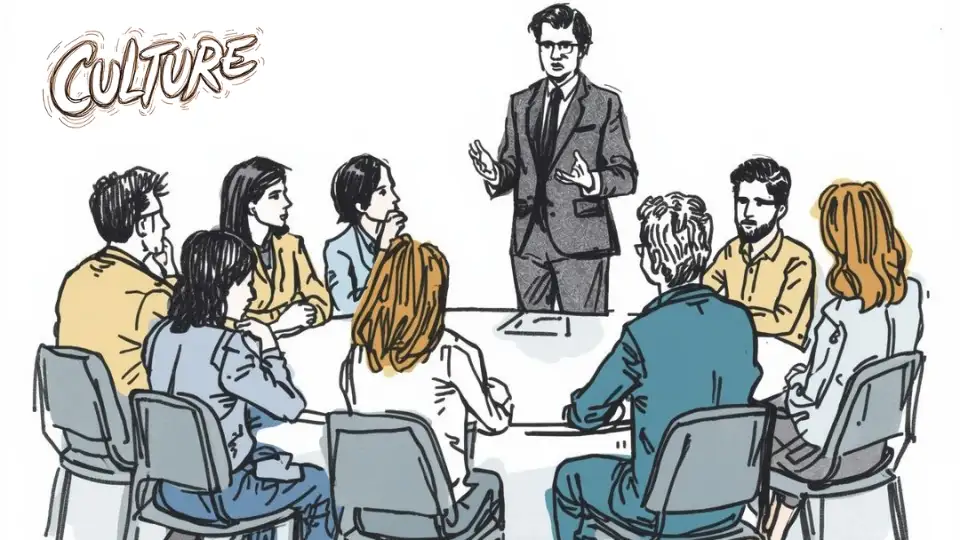
Rajesh, the department head, was under pressure. A client escalation had come in late Sunday night. Timelines were tight. Senior leadership wanted answers.
When Dheeraj, a mid-level manager, tried to explain a delay caused by a dependency issue, Rajesh cut him short.
“This is not the time for excuses,” he said sharply.
“Just get it done.”
The room went silent.
– No one mentioned Respect.
– No one spoke about Psychological Safety.
– The culture deck didn’t make it into the meeting.
But leadership behaviour did.
How Leadership Behaviour Actually Shapes Workplace Culture
Culture is not built during townhalls.
It is built into everyday leadership moments.
In meetings like this. In reactions under pressure. In what leaders say and what they ignore.
Kishor learned more about the organization’s real culture in that one meeting than he did in the entire onboarding week. And this is where most culture decks quietly fail.
The assumption organizations make:
Many organizations believe that once culture is clearly articulated, leaders will naturally live it. But leadership behaviour isn’t absorbed through slides.
It’s shaped by:
- Habits formed over the years
- Pressure from targets
- What leaders themselves experienced growing up in organizations
Rajesh wasn’t a bad leader.
He was a capable, results-driven professional. But no one had ever worked with him on how to lead when things go wrong.
A familiar pattern:
A few floors below, Priya was managing a growing team.
She genuinely wanted to create a supportive environment. Priya believed in open communication. But every time deadlines slipped, she found herself stepping in, taking control, and pushing harder.
Not because she didn’t value collaboration, but because delivery pressure didn’t leave room to pause.
Saloni, one of her team members, stopped speaking up in meetings after being interrupted a few times.
- Not intentionally.
- and not maliciously.
Just… unnoticed.
Culture didn’t erode loudly. It eroded quietly.
Why culture decks fall short
They describe values, not behaviours
Most culture decks say what matters.
They rarely explain:
- What does respect look like when a client is angry?
- What does ownership mean when someone makes a mistake?
- How do leaders stay empathetic without compromising results?
Without this translation, leaders interpret culture in their own way, often under stress.
Leaders are expected to role-model instinctively
There’s an unspoken belief that leaders will “figure it out”. But leadership is not instinctive for everyone.
Many leaders have never been helped to:
- Give difficult feedback calmly
- Listen without reacting
- Manage disagreement without authority
So, they fall back on what feels safe, control, speed, and hierarchy.
Systems reward delivery, not behavior
- While culture decks talk about people’s values, performance systems often reward only outcomes.
- When results matter more than behavior, leaders quickly learn what truly counts.
- Culture then becomes aspirational, not operational.
When organizations start doing it differently
We have seen organizations pause after noticing rising attrition, disengagement, or leadership fatigue. The instinctive response is often to rewrite the culture deck, but the shift happens when the focus changes from communication to capability.
Instead of asking:
“Do leaders know our values?”
They ask:
“Are leaders equipped to live them on difficult days?”
That’s when leadership development moves into real situations, conversations, conflicts, and decisions leaders face every day.
Culture changes one conversation at a time.
- When Rajesh later learned to pause, ask questions, and separate pressure from people, meetings felt different.
- When Priya was supported to delegate without guilt and coach instead of control, her team slowly began to speak up.
Nothing dramatic changed overnight. But behavior shifted. And with it, culture followed.
This is why leadership development cannot stop at values articulation and needs to build behavioral capability.
The question that matters:
Before rolling out the next culture initiative, it’s worth asking:
Do our leaders know what our culture looks like when things don’t go as planned?
Because culture is not built into decks.
It’s built in leadership moments, repeated, reinforced, and supported.
If you’re looking to build this kind of behavioural leadership capability in your organization, explore how we approach leadership development and behavioural training.
Frequently Asked Questions
Why don’t culture decks build leaders?
Culture decks describe values like respect and ownership, but they do not show leaders how to act on those values under pressure. Leaders learn culture from daily behaviour, not slides. A deck states the aspiration; leadership behaviour in real moments, especially difficult ones, is what teams actually absorb and copy.
How does leadership behaviour shape workplace culture?
Culture forms in everyday leadership moments: how a manager reacts to bad news, handles disagreement, or responds when deadlines slip. Employees read these signals and adjust. One tense meeting can teach a new joiner more about the real culture than a full onboarding week, because behaviour, not messaging, sets the tone.
What is the difference between articulating culture and building it?
Articulating culture means naming values in a deck or a townhall. Building culture means equipping leaders to live those values on hard days. Articulation answers ‘do leaders know our values?’ Building answers ‘can leaders act on them under pressure?’ The second question is where culture actually changes.
How do you develop leaders to live company values under pressure?
Move development out of slides and into real situations. Help leaders practise giving difficult feedback calmly, listening without reacting, and managing disagreement without pulling rank. When leaders rehearse these behaviours and get honest feedback, they carry them into meetings, and culture shifts one conversation at a time.
Can workplace culture change without rewriting the culture deck?
Yes. Rewriting the deck changes the words, not the behaviour. Culture shifts when leaders change how they act: pausing under pressure, separating the problem from the person, and coaching instead of controlling. These small, repeated changes move culture far more than any new slide.