
Key takeaways• AI agents in HR work best on recurring coordination work, once the process behind it is clear and stable. • Interview scheduling, leave queries and onboarding reminders make good first pilots. CV decisions and policy exceptions need human review. • Automation speeds up whatever process you give it, including a broken one. Fix the process first. • HR teams need AI literacy alongside sharper interviewing and conversation skills. • Judge a pilot by answer accuracy and the time it saves after corrections. |
Note: This article refers to India’s Digital Personal Data Protection Act, 2023. It is general guidance, not legal advice. Please read the disclaimer at the end.
How interview reschedules took over an HRBP’s week
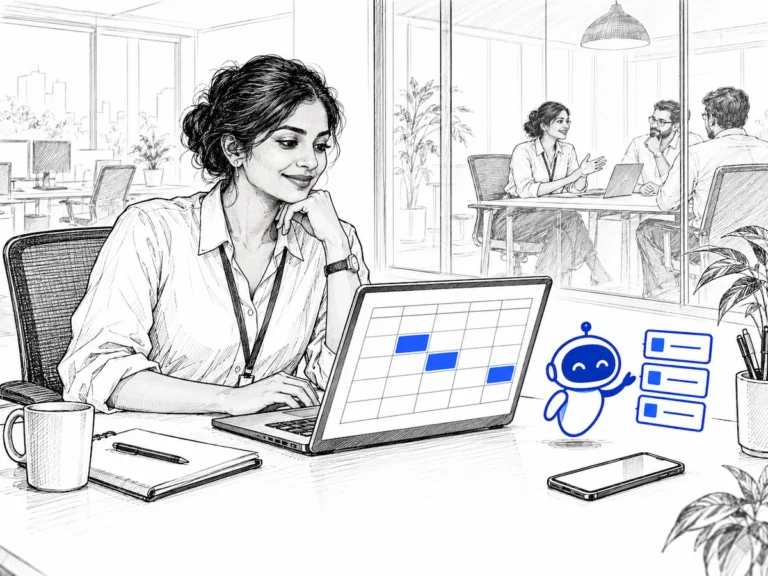
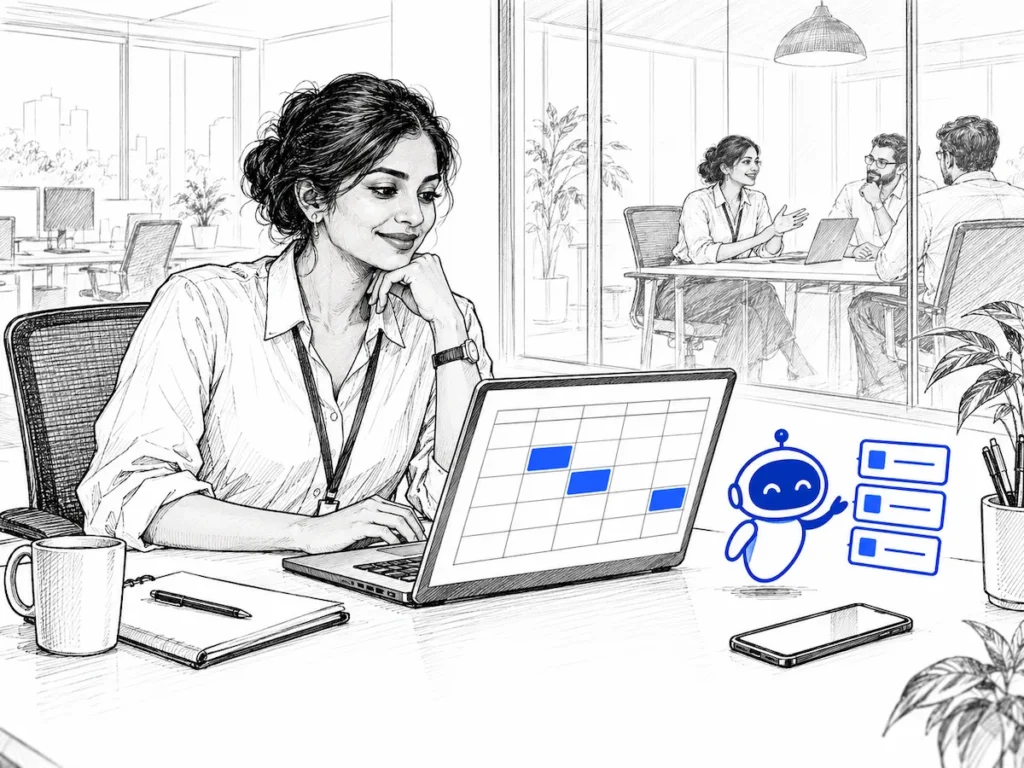
Apoorva is an HR business partner at a 480-person technology company in Hyderabad. Some of its teams sit in the USA.
Last year, she usually had three or four open positions. Three hiring vendors and two recruiters fed candidates into about 15 interviews a week. Half of those interviews, sometimes more, got rescheduled.
The reasons kept changing. A hiring manager got pulled into a client call. The US interviewers had evening slots in IST, and those slipped by a day, then another. Sometimes the candidate could not make it.
Candidates did what candidates in India do. They sent WhatsApp messages to the recruiters, asking whether the interview was still on. The recruiters were often unsure themselves, so they messaged Apoorva.
When Excellential reviewed the hiring process with her, she said something that has stayed with me. “I have become a coordinator, chasing hiring managers and interviewers. Nobody seems to be happy.”
Candidates were frustrated. She had lost some good ones to the delays. Every reschedule wasted recruiter time and vendor effort. It also made the company look disorganised to the people it wanted to hire.
Fixing the process before reaching for a tool
A scheduling bot could have sent reminders faster. It could not have fixed the reason interviews kept moving.
So Excellential started upstream. A thorough job analysis for each open role told recruiters and vendors exactly what to screen for. Excellential trained the recruiters to filter out weaker matches before they reached a panel. Each open profile got mapped to named interviewers. Feedback moved into a structured format, and the team switched to shared calendars.
The most important step came from Apoorva herself. She sat with the hiring managers and showed them how each reschedule undid the work of recruiters, vendors and candidates. Apoorva asked every interviewer to share weekly slots, so recruiters could map candidates in advance. She also told them plainly that constant coordination was eating into her real work as an HRBP.
Why conversations alone could not hold the gain
Each time she had that conversation, reschedules dropped by 20 to 30%. Within a few days, they were back at 40 to 50%. The roles were a priority, but every interviewer, including the hiring manager, still had daily operations to run.
Holding that gain needs structure: weekly slots released in advance, a shared calendar and one confirmed status. That is where a scheduling tool earns its place, once people and process are in line.
It is also the lesson I now share with every HR team asking about AI agents. Automation speeds up whatever process you give it, including a broken one.
What is an AI agent in HR?
An AI agent in HR is software that uses an AI model and connected tools to complete a defined task. It works within approved limits and can take actions such as sending a calendar confirmation.
In Apoorva’s case, a scheduling agent could read the interviewers’ shared weekly slots and offer candidates options. A recruiter would approve before it confirmed anything.
A chatbot that answers questions is not automatically an agent, and a timed reminder needs no AI at all. Indian HRMS platforms such as Keka, Darwinbox and greytHR already offer workflows and reminders. Check what yours does before buying anything new.
Will AI agents replace HR jobs in India?
Some HR tasks will shrink, but the early evidence points to roles changing shape.
Harvard Business School professor Suraj Srinivasan co-authored a working paper on US job postings after ChatGPT’s launch in November 2022. Postings fell 13% for occupations dominated by structured, repetitive tasks. Demand rose 20% for roles needing analytical, technical or creative work. HBS Working Knowledge summarises the research, and it covers US vacancies only.
For an Indian HR leader, the useful step is to review each role task by task. Separate what a tool can support from what needs a person’s judgement. Apoorva’s scheduling could be supported, but the conversation with hiring managers needed her.
Six HR tasks AI agents can support
These six are in no particular order. Fit depends on your process and on what an error would cost.
1. Interview scheduling
Connected to shared calendars, a tool can offer slots, send reminders and handle reschedules across IST and US time zones. This is where Apoorva’s week would have changed, but only after interviewers released weekly slots. An agent cannot book time that nobody has given.
Give vendors and candidates one confirmed status, so nobody chases a recruiter on WhatsApp. Limit the tool’s calendar access, and let HR handle accessibility requests and senior hires personally.
2. Initial CV review
AI can sort applications and pull out stated qualifications against agreed criteria. Those criteria should come from a proper job analysis, not from an old job description.
A CV is an incomplete account of a person. A candidate from an IT services firm may describe the same work very differently from someone at a product company. Keyword matching can miss that. Test the tool with varied CVs and check whom it screens out.
Keep human review for borderline cases and every rejection. Then strengthen the next stage through behavioural interviewing training, so each panel asks consistent questions and scores evidence.
3. Leave and attendance queries
A tool can explain standard rules on earned leave, comp-off and festive holidays from an approved policy. Answering a question about one person’s balance needs secure access to current records and an identity check.
Keep general policy answers separate from personal data. Route disputed balances, attendance regularisation and exception requests to HR. Each answer should say clearly when a person needs to review it.
4. Onboarding document follow-ups
Automated reminders help new joiners track pending items such as Aadhaar and PAN copies, relieving letters and background verification forms. A simple checklist often does this job without an agent.
Collect identity and bank documents only through approved, secure channels. A joiner whose previous employer has not issued a relieving letter needs a phone call from HR. A fifth reminder will only add to the stress.
Put the time you recover into day one: agreed expectations with the manager, laptop access and a buddy.
5. Policy questions
An AI assistant can pull answers from approved policy documents and show the source for each answer. That suits standard questions about travel claims, reimbursements or notice periods.
The answer must match the current policy and the employee group. Contractors, probationers and permanent employees often follow different rules. Questions about exceptions or conflicting documents should go to HR.
Test vague and badly worded questions as well as tidy ones. A good tool tells the employee when it cannot answer reliably.
6. Routine reporting
Reporting tools can compile approved data and draft monthly summaries. Check definitions before you compare figures, because attrition and headcount numbers change with the period you include. Verify totals against the source system before anyone shares the report.
If resignations rise in one function, the report should start an investigation. The cause lies with people, so HR has to go and speak to them.
What HR stays accountable for
AI can help draft interview questions or organise notes. HR and managers remain accountable for every decision about a candidate or employee.
Performance feedback, grievances and role changes need context and a named owner. Employees should know who can review a decision when something looks wrong. Apoorva’s talk with her hiring managers shows the skill automation leaves to people. HR teams need practice in it.
Prepare the process before you introduce the tool
A useful pilot starts with one specific problem. Write down how the task works today and what an error could affect. Agree which data the tool may access, what it can do alone and who fixes its errors.
Employee and candidate data now falls under India’s Digital Personal Data Protection Act, 2023. MeitY notified the DPDP Rules in November 2025, and they come into force in phases. The main employer obligations apply by May 2027, though MeitY has proposed bringing some dates forward.
Confirm the current position with your legal adviser before any pilot handles personal data. Check what candidates and employees are told about how their data is used. Keep personal records out of unapproved tools.
Build capability with Learn, Apply, Measure, Sustain
Excellential’s training methodology structures team development in four stages: Learn, Apply, Measure, Sustain. Evaluation draws on the Kirkpatrick Model, which looks at reaction, learning, behaviour and results.
Learn
Identify the skills the new process needs. For a policy assistant, HR must learn to check source documents and spot unsupported answers.
Apply
Practise with approved sample questions, including policy exceptions, before the tool answers real employees. Say an employee asks whether unused leave carries forward. The tool gives a general answer, and the reviewer checks the employee category and policy year before accepting it.
Measure
Check whether team members catch errors during practice, then watch whether they apply those checks at work. Track answer accuracy, unresolved queries and net time saved after corrections.
A workshop feedback score alone cannot show a change in rework or wrong answers. Our blog on measuring training impact explains how to track workplace behaviour and business results.
Sustain
Review performance at 30, 60 and 90 days, and update source documents whenever a policy changes.
Excellential’s AI-enabled learning case study shows this stage at work for a client. AI helped diagnose learning gaps, personalise learning and reinforce it over time.
A 90-day plan for a small HR team
Days 1 to 30: review and prepare
List recurring tasks and check what your HRMS already offers. Pick one process and record a baseline for time, errors and unresolved requests. Assign an owner and agree how you will judge the pilot.
Days 31 to 60: test with supervision
Pilot a narrow use, such as answering general questions from one approved policy. Test internally first. Record wrong answers, checking time and employee feedback, and pause if errors cross an agreed limit.
Days 61 to 90: review and decide
Compare results with the baseline and decide whether to expand, revise or stop. If the pilot saves time, agree where that time goes. For Apoorva, it would go into hiring manager conversations and candidate experience.
Managers decide whether a pilot sticks. Gallup’s US workplace research finds that employees with actively supportive managers are nearly twice as likely to use AI frequently. Yet as of May 2026, only 36% of employees in AI-integrating organisations strongly agreed their manager offered that support.
How Excellential can help your HR team
Excellential’s AI literacy training helps HR teams practise using AI, check its output and handle data responsibly. We pair it with the human skills HR work depends on, from structured interviewing to difficult conversations.
Share your team’s current tasks, tools and development needs with Excellential. Book a Free Consultation to get a programme suggestion that fits.
Frequently asked questions
Will AI agents replace HR jobs in India?
AI agents will take over some repetitive HR tasks, such as interview scheduling and routine policy queries. Harvard Business School research on US job postings shows demand falling for repetitive roles and rising for analytical work. For Indian HR teams, roles are more likely to change shape. Judgement, conversations and accountability stay with people.
Which HR tasks can AI agents support?
AI agents can support interview scheduling, initial CV sorting, leave queries, onboarding reminders, policy questions and routine reporting. Some of these need only the workflow features already in your HRMS. Assess each task separately, starting with what an error would cost and who would fix it.
Can AI reject candidates without HR review?
It should not. AI can sort CVs and flag gaps against agreed criteria, but a person should review every rejection and borderline case. Test the tool with varied CVs to see whom it screens out. The organisation stays accountable for fair hiring decisions, whichever tool it uses.
What should a small HR team pilot first?
Start with a narrow, low-risk task, such as answering general questions from one approved policy or sending interview reminders. Keep personal records out of the first pilot. Test internally and record a baseline for time and errors. Give employees a clear route to a person when the tool gets stuck.
What skills should HR teams build for AI?
HR teams need AI literacy first. That means checking AI output, handling personal data responsibly and spotting when the process is the real problem. They also need stronger human skills, such as behavioural interviewing, feedback and difficult conversations. These skills cover the work that tools leave to people.
Disclaimer
This article offers general information on HR practice and India’s Digital Personal Data Protection Act, 2023 and its Rules, current at the publication date shown above. It is not legal advice. Compliance timelines may change through government notification. Please consult a qualified legal adviser before applying any of this to your organisation’s data processing.