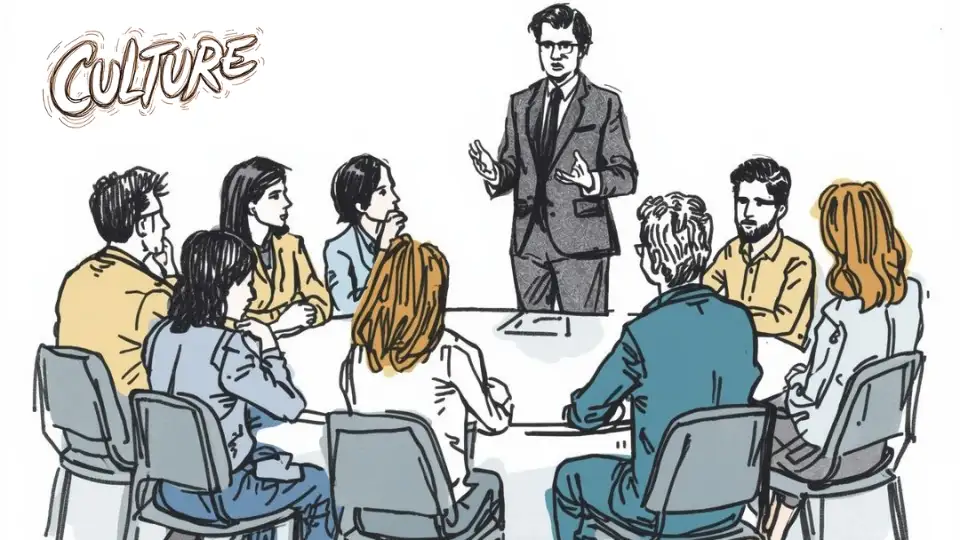
DIFFICULT CONVERSATIONS TRAINING
Managing difficult conversations training for Indian workplaces
Difficult conversations training teaches professionals a structured, repeatable way to raise high-stakes issues with a boss, a peer, or a direct report without damaging the relationship.
The conversations you avoid today become the crises you manage tomorrow. Excellential’s difficult conversations training gives your people proven frameworks for high-stakes dialogues where emotions run strong and opinions differ.
- Practical from day one. Tools your people can use in their next tough conversation.
- Built for Indian workplaces. Real scenarios around hierarchy, seniority, and face-saving dynamics.
- 25+ years of HR and L&D expertise. 20,000+ professionals trained across 85+ organisations.
- Flexible delivery. In-person, virtual, or hybrid. English, Hindi, and regional languages.
Tell us about your team, and Excellential will recommend the right format.








































KEY TAKEAWAYS
- Built for people managers, HR professionals, and sales teams who face high-stakes conversations involving hierarchy, emotion, or client pushback.
- Excellential names five reasons these conversations get avoided in Indian workplaces: hierarchy that makes honesty feel risky, relationships prioritised over directness, avoidance mistaken for diplomacy, conversations that come out wrong under frustration, and no formal training in the skill.
- The programme runs four modules built on Excellential's Share-Explore-Agree framework: preparing for high-stakes talks, staying in dialogue under pressure, speaking up and listening, and converting dialogue into action.
- Participants report faster conflict resolution across teams and fewer issues escalating to HR after the training.
- Excellential built the Share-Explore-Agree framework specifically for Indian hierarchy and face-saving dynamics, rather than adapting a Western model.
- Every participant leaves with framework cards, preparation templates, and conversation scripts to use before their next difficult conversation.
Share the conversations your people keep avoiding- feedback to a senior colleague, pushback with a client, and Excellential will build the role plays around them.
THE PROBLEM
Why do important conversations keep getting avoided
A story Excellential hear in every company it works with. The names change. The pattern never does.
Your project is three weeks behind. Everyone knows why. The senior developer has consistently missed deadlines, and it hasn’t been addressed because he has been with the company for 11 years. So the team works around him. The timeline slips further. The client starts asking uncomfortable questions. And the one conversation that could fix everything? Nobody is having it.
In Indian workplaces, this pattern is everywhere. And it persists for reasons that go deeper than individual courage.
Excellential has written more on why capable people struggle with exactly this kind of accountability conversation once they’re in charge, in Why Your Best Performers Struggle as Managers.
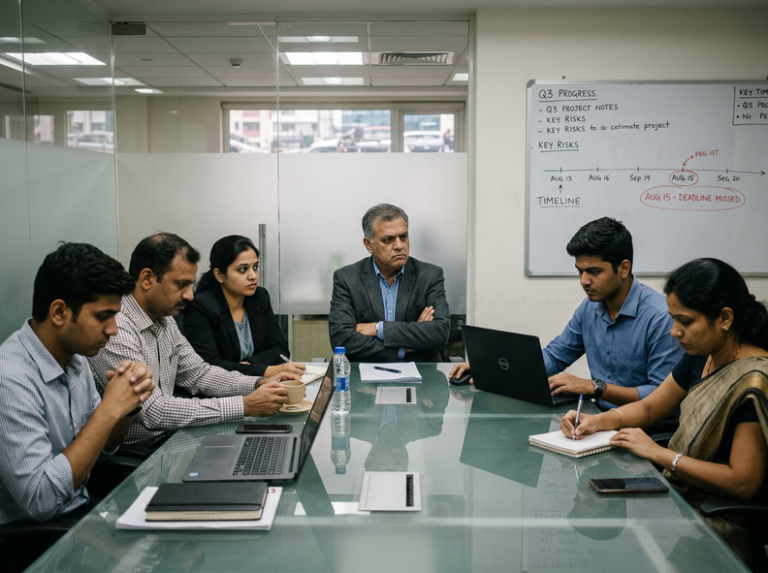
Why are these conversations so hard in Indian workplaces
After delivering difficult conversations training across IT, BFSI, manufacturing, pharma, and startups, the same patterns surface in every engagement.
1. Hierarchy makes honesty feel dangerous
The open-door policy exists on the intranet. The unwritten rules say something different.
Speaking up to a senior person carries real risk in many Indian organisations. So people smile, nod, and vent to colleagues in the cafeteria instead of raising the issue where it matters.
2. Relationships override directness
A genuine strength that becomes a liability when overplayed.
Excellential value relationships deeply. But it also means people will tolerate a terrible situation for six months rather than risk one conversation that might feel confrontational.
3. The culture rewards avoidance
Not addressing problems is seen as diplomacy.
Avoidance is often framed as maturity, professionalism, or restraint. In reality, it is just a postponement. And when the conversation finally happens after months of resentment, it goes ten times worse than it would have in week one.
4. When people finally speak up, it comes out wrong
Frustration takes over. The conversation collapses.
Sarcasm creeps in. Passive aggression does the talking. The other person gets defensive. Both sides leave more convinced than ever that the other person is the problem.
5. Nobody teaches this
The most important interpersonal skill is with zero formal training.
Not an MBA programme. Not onboarding. Not the annual leadership offsite. The ability to hold a high-stakes conversation calmly, clearly, and productively is arguably the most important interpersonal skill in professional life, and most people have never received a single hour of formal training in it.
Research shows the average employee wastes seven to eight working days per year avoiding or recovering from difficult conversations. Multiply that across a 200-person team: 1,400 to 1,600 productive days lost annually. And that is just the measurable part. Damaged client relationships, talented people leaving, and festering conflicts that poison team dynamics for months compound silently. Enquire Now →
THE PROGRAMME
What this difficult conversations training covers
Excellential teaches your people how to have the conversations they have been avoiding. Not through aggression. Not through memorised scripts. Through a structured approach built on Excellential’s proprietary Share-Explore-Agree framework: share your perspective with facts first, explore the other person’s viewpoint with genuine curiosity, and move toward agreement through mutual purpose.
Module 1
Recognising and preparing for difficult conversations
What makes a conversation high-stakes? The three conditions: high stakes, differing opinions, and strong emotions, and how to spot them before walking in. Getting clear on the outcome before the conversation starts. Reading verbal and non-verbal cues that safety is breaking down.
Module 2
Staying in dialogue under pressure
Restoring trust when the other person shuts down, becomes defensive, or turns hostile. Separating what happened from the story you told yourself about what happened, which is where most emotional hijacking occurs. Techniques for managing your own emotions in the moment, not just in theory.
Module 3
Speaking up and listening in
How to voice a concern without triggering defensiveness, leading with facts, not judgment. Active listening techniques that surface what the other person actually means, especially when Indian workplace norms mean “yes” doesn’t always mean yes. Balancing advocacy (stating your view) with inquiry (genuinely exploring theirs) so the conversation moves toward resolution instead of a standoff.
Module 4
Indian workplace dynamics and moving to action
Speaking truth to power without putting your career on the line. Delivering tough messages while protecting dignity on both sides. Converting productive dialogue into concrete commitments, timelines, and follow-through, because a great conversation without accountability is a great waste of time.
Where the issue is less about a single conversation and more about an ongoing pattern of friction within a team, Excellential’s Conflict Management Training may be the better fit.
Want a detailed managing difficult conversations training programme outline for your team?
Excellential will tailor the modules to your industry, team size, and the specific conversations your people avoid.
LEARNING OUTCOMES
What your people walk away with
- Recognise when a conversation has become high-stakes and prepare before walking in.
- Stay focused and calm when the other person gets emotional, defensive, or shuts down.
- Express disagreement clearly without fracturing the relationship.
- Create safety so the other person feels heard rather than cornered.
- Push back on senior leaders without putting their careers on the line.
- Handle deflection, silence, and passive resistance without losing the thread.
- Shift from blame to problem-solving when emotions are running the show.
- Follow up after a tough conversation to ensure agreements hold and trust is rebuilt. It's the same follow-through that Excellential built into a 360-degree feedback programme for a mid-sized IT company.
- Coach their teams to handle difficult discussions instead of escalating upward.
- Apply the Share-Explore-Agree framework to a real workplace situation within five days.
OUR APPROACH
How does Excellential teach managing difficult conversations
If managing difficult conversations training does not change behaviour, it is a seminar with a nicer name. Every element of Excellential’s approach is designed to produce muscle memory, not memorised theory.
Role plays built around your reality
Giving feedback to a senior team member who has been coasting. Pushing back on a client’s unreasonable deadline. Addressing a colleague who keeps missing commitments. Raising concerns with a manager who reacts badly to criticism. Every scenario is customised to your industry and company culture.
Practice, refine, repeat
People practise the same conversation multiple times, refining their approach each round. Excellential uses video analysis and real-time facilitator feedback. By the end, the techniques feel natural.
Practical tools they keep
Every person leaves with framework cards, preparation templates, and adaptable conversation scripts they can reference before their next tough conversation.
Follow-up coaching is built in
Reinforcement sessions and a resource toolkit in the weeks after the programme. Knowing the framework and using it under pressure are two different things.
Muscle memory, not memorised theory.
See how our approach works for organisations like yours.
RESULTS
What changes after this, difficult conversations training
For the individual
- Confidence to address issues early, before they compound.
- Stronger relationships grounded in honesty, not polite avoidance.
- Less stress from carrying unresolved tensions for weeks.
- Career growth from being the person who handles tough situations well.
- The ability to influence decisions without formal authority.
For the organisation
- Faster conflict resolution across teams.
- Better retention: people stay when they feel heard.
- Improved client relationships through proactive communication.
- Fewer escalations are landing on HR's desk.
- A culture where problems get solved, not buried.
What conversation has your team been avoiding?
That is the cost you are already paying. Let us help your people have it well.
Testimonials
DELIVERY
Format and delivery options
Every organisation has different constraints. Excellential adapts to your reality, not the other way around.
| Format | Duration | Best for |
|---|---|---|
| Intensive workshop | 2 full days (in-person) | Deepest skill-building with extensive role plays and video analysis |
| Virtual programme | 4 half-day sessions over 2 weeks | Distributed or hybrid teams with practice assignments between sessions |
| Blended programme | 1-day workshop + 4 virtual follow-ups over 6 weeks | Sustained behaviour change |
| Custom format | Flexible | Designed around your team's specific situations and schedule |
Excellential delivers managing difficult conversations training across India, including Bengaluru, Mumbai, Delhi, Hyderabad, Chennai, Pune, Gurgaon, Noida, Kolkata, and Coimbatore. All formats available in English and Hindi. Regional language delivery on request. Recommended batch size: 12 to 25 people.
WHO IS IT FOR
Who should attend this programme?
Built for professionals who regularly face conversations where the stakes are high, emotions are strong, and the outcome matters.
People managers at any level
Who handles performance conversations, team conflicts, or client escalations and needs a structured approach beyond instinct.
HR professionals and HRBPs
Who mediates workplace issues and coaches managers through tough situations. This programme gives them a framework to teach others.
Sales professionals
Those who need to negotiate scope, push back on unreasonable asks, and manage client expectations without damaging the relationship.
Cross-functional team leads
Navigating competing priorities, departmental politics, and stakeholder friction where authority is limited but influence is essential.
Senior leaders
Those who need to deliver tough messages while keeping trust and morale intact. The higher the stakes, the more the framework matters.
Anyone avoiding a conversation they know they should have
If there is a conversation you have been postponing for weeks or months, this programme is built for exactly that situation.
Not sure if this fits your team?
Excellential will help you assess the need and recommend the right format. No hard sell.
WHY EXCELLENTIAL
Why organisations choose Excellential for difficult conversations training
You have options. Large global firms, boutique trainers, and online courses. Here is what makes working with us different.
The Indian context is not an afterthought
Western frameworks assume flat hierarchies and direct communication norms. Excellential builds every scenario for the reality of seniority, face-saving, and indirect communication. The advice to “just tell them directly” does not work when you are a 32-year-old leading a 52-year-old veteran.
The Share-Explore-Agree framework
Excellential’s proprietary approach gives people a repeatable, structured method for sharing difficult truths while keeping the relationship intact. It was not imported from a Western textbook. It was built here, for here.
Your scenarios, not ours
Excellential builds role-plays around your industry, company culture, and the specific situations your people struggle with. No generic conflict scenarios from a manual.
Specialist facilitation
Our facilitators have spent years coaching leaders through real high-stakes conversations. They bring the kind of judgment that only comes from repeated experience in Indian organisations.
Measurable impact
Aligned with the Kirkpatrick Model. Excellential track behaviour change and business outcomes, not just participant satisfaction scores.
Follow-up coaching included
Reinforcement sessions and a resource toolkit in the weeks after the programme. Because knowing the framework and using it under real pressure are two different things.
The cost of silence is higher than you think
Every unaddressed conflict, every unspoken concern, every feedback conversation that never happened: you are paying for it. In morale. In productivity. In good people walking out the door. Ask yourself: what is the one conversation you have been avoiding for six months? That is the cost you are already paying.
This is the same pattern Excellential traces in Why Most Leadership Training Fails to Change Behaviour at Work.
FAQS
Frequently asked questions
What is managing difficult conversations training?
A structured program that teaches professionals how to handle high-stakes discussions where opinions differ and emotions run strong. The goal is to turn avoided conversations into productive dialogues through practiced frameworks like Share-Explore-Agree.
How is this different from general communication skills training?
Communication skills training covers presentations, writing, and meeting facilitation. This difficult conversations workshop focuses specifically on emotionally charged interactions where the stakes are high and the relationship is on the line. Think of it as the advanced course for when standard skills fall short.
Can you customise the role-plays for our industry?
Excellential always does. Before the programme, we work with your HR team and managers to identify the specific conversations your people avoid or handle badly, then build scenarios around those exact situations.
What is the ideal group size?
12 to 25 people. Enough for diverse perspectives. Small enough that everyone gets meaningful practice time in role-plays and personalized feedback.
Is this the same as conflict resolution training?
There is overlap. Conflict resolution focuses on mediating after a dispute has erupted. This program focuses on having the conversation before conflict escalates and on handling the emotional, high-stakes moments in the hard middle. We cover both preventive and responsive skills.
Does this cover giving difficult feedback to team members?
Yes. Performance feedback is one of the most common applications. Excellential covers how to structure the conversation, manage emotional reactions, and convert feedback into concrete commitments.
Can this help with upward communication and pushing back on senior leaders?
Absolutely. Upward communication is one of the hardest categories of critical conversations training. Excellential includes specific scenarios and scripts for speaking truth to power, disagreeing with decisions, and raising concerns with people who have authority over you.
Is this available in Bengaluru, Mumbai, and other Indian cities?
Yes. Excellential delivers across India: Bengaluru, Mumbai, Delhi, Hyderabad, Chennai, Pune, Gurgaon, Noida, Kolkata, and Coimbatore. Virtual and hybrid formats available for distributed teams.
Can this work for virtual or hybrid teams?
Most programs in India import Western methodologies without adapting them. Ours is built from the ground up for Indian workplace dynamics: hierarchy, relationship-first culture, and face-saving norms. Our proprietary Share-Explore-Agree framework was developed in India for Indian organizations. With 25+ years of experience and 20,000+ professionals trained, Excellential brings pattern recognition that imported programs cannot match.