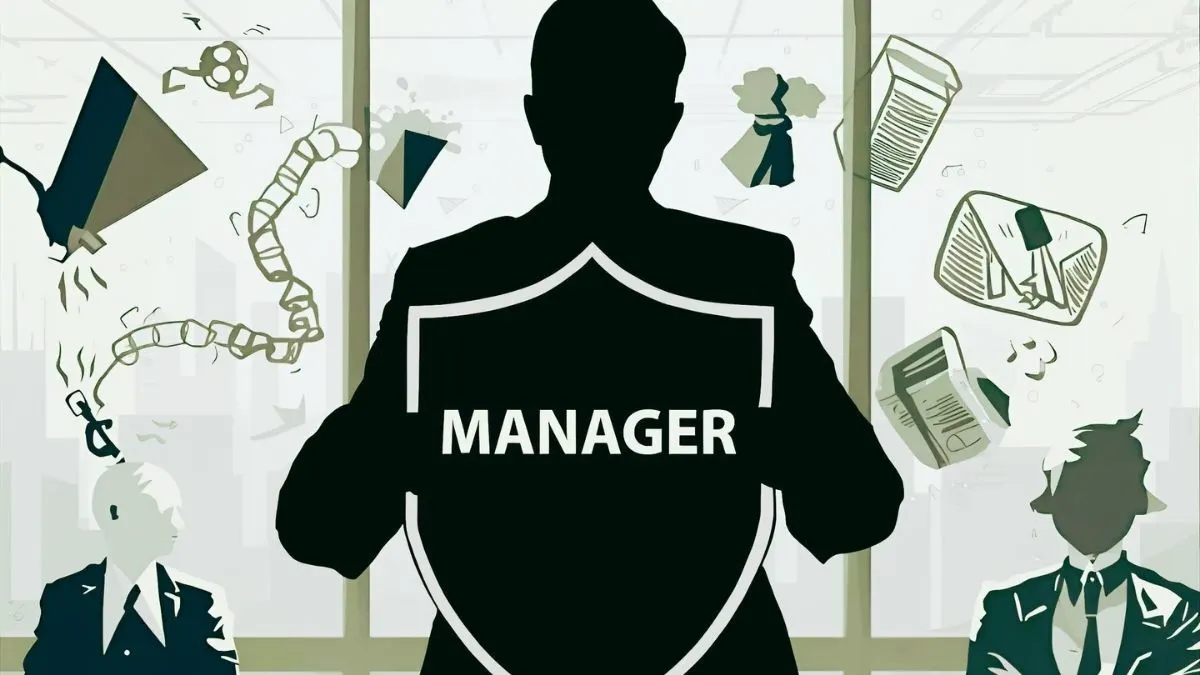
FIRST-TIME MANAGER TRAINING
First-time manager training for newly promoted people leaders
Your best performer just got promoted. Now they need to lead people, not just projects. Excellential’s management training for first-time managers gives new managers the skills, frameworks, and confidence to deliver results from week one.
- Practical from day one. Tools your managers can apply in their next team meeting.
- Built for Indian workplaces. Real challenges around hierarchy, seniority, peer-to-boss transitions, and managing across age gaps.
- 25+years of HR and L&D expertise. 20,000+ professionals trained across 85+ organisations.
- Flexible delivery. In-person, virtual, or hybrid. English, Hindi, and regional languages.
Tell us about your team, and Excellential will customise a programme.



































KEY TAKEAWAYS
- Excellential's first-time manager training is built for professionals promoted into people management in the last 12 months, including technical specialists and high-potential contributors moving into their first team-lead role.
- The programme addresses five recurring challenges, including the peer-to-manager transition and the age-and-seniority dynamic in Indian workplaces.
- Six modules cover managerial mindset, delegation, feedback, one-to-ones, team dynamics, prioritisation, and practical AI use.
- New managers learn to delegate, manage performance, run effective one-to-ones, and build stronger team relationships.
- Customised role plays, workplace scenarios, peer discussions and a 30-day action plan support application after training.
- Excellential uses its adapted Kirkpatrick framework to align learning, application, and business measures with the organisation.
Share your cohort size and the challenges you want addressed. Excellential will customise the programme specifically for your first-time managers.
Why first-time managers need structured preparation
THE PROBLEM
Organisations often promote strong individual contributors without preparing them for the responsibilities of managing people.
The skills that make someone a top-performing analyst, developer, or salesperson are almost entirely different from the skills they need as a manager. A star coder does not automatically know how to give feedback to an underperforming teammate. A great account executive does not instinctively know how to delegate without hovering over every detail.
Without structured preparation, new managers may rely on the habits that made them successful as individual contributors.
Excellential tells this exact story in The Accidental Manager: A Survival Story.

Every month, a first-time manager goes without training, and you pay for it in lower engagement, higher attrition, and slower delivery. Read more →
The patterns that Excellential sees across every industry
After working with 85+ organisations across IT, BFSI, manufacturing, retail, and startups in Bengaluru, Mumbai, Hyderabad, Pune, and Delhi, the same five problems show up with striking consistency:
1. The peer-to-boss problem
You were equals yesterday. Today, you are supposed to hold them accountable. Nobody talks about how awkward this is, but every new manager feels it. Some overcompensate by becoming too authoritarian. Others avoid asserting themselves entirely. Both approaches damage the team.
2. The delegation gap
New managers were promoted because they were excellent at doing the work. Letting go of that work feels deeply uncomfortable. “If I want it done right, I should do it myself” becomes the unofficial motto. The result: they burn out, their team never grows, and the organisation gets a very expensive individual contributor with a manager title.
3. Feedback avoidance
Giving someone honest feedback about their performance is hard anywhere. In Indian workplaces, where relationships and harmony carry enormous weight, it is even harder. So new managers let things slide. Small issues become big problems. By the time they finally address it, the damage is done, and the conversation is ten times harder.
4. The age and seniority dynamic
A 28-year-old managing a team that includes a 45-year-old veteran is a routine reality in Indian companies. Without specific skills to navigate this, both sides end up uncomfortable and unproductive. Most management training programmes built for Western workplaces don’t even acknowledge that this challenge exists.
5. No time to lead
Without basic prioritisation skills, new managers spend every day firefighting: answering Slack messages, sitting in back-to-back meetings, and clearing backlogs.
The cost of not training your first-time managers
Team engagement dips. Good people start exploring other opportunities. Delivery slows down. And the talented individual contributor you promoted starts wondering whether management is even for them.
Research cited by Payscale found that 44% of first-time managers feel unprepared for the role, and 87% wish they’d had more training before stepping into it. An untrained manager, no matter how well-intentioned, is a retention risk for every person on their team.
THE SOLUTION
What this first-time manager training covers
Six modules address the situations new managers commonly face at work.
Module 1
The manager's mindset shift
- Moving from “doing the work” to “enabling the team.”
- Understanding the IC-to-manager transition.
- Recognising the common traps new managers fall into.
- Building a personal leadership identity.
Module 2
Delegation that works
- Choosing what to delegate and to whom.
- Structuring the delegation conversation.
- Tracking progress without micromanaging.
- Overcoming the “I will just do it myself” reflex.
Module 3
Feedback and difficult conversations
- Giving constructive feedback using the SBI (Situation-Behaviour-Impact) model.
- Addressing performance gaps early.
- Handling emotional reactions.
- Giving praise that actually motivates.
- Managers who need deeper practice specifically on high-stakes conversations can pair this with Excellential’s Managing Difficult Conversations Training.
Module 4
Team communication and one-on-ones
- Running structured 1:1 meetings that build trust.
- Asking questions that surface real issues.
- Facilitating team meetings effectively.
- Adapting communication for different personality types.
Module 5
Managing former peers and team dynamics
- Setting boundaries with empathy.
- Earning respect without demanding it.
- Handling jealousy or resentment from former peers.
- Building psychological safety and team norms.
- Teams that need a deeper, structured intervention on trust and psychological safety can follow up with Excellential’s Building High-Performing Teams Training.
Module 6
Prioritisation, productivity, and AI tools
- Time management frameworks for managers.
- Saying no constructively.
- Using AI tools for emails, meeting prep, and routine tasks.
The first-time manager training checklist
12 skills every new manager should develop in their first 90 days. Use it to assess gaps in your current team or as a self-evaluation tool.
OUR APPROACH
How Excellential teaches
Excellential uses role-plays, workplace scenarios, peer discussions, and 30-day action plans. Everything is customised to your industry and company culture.
This isn’t generic soft skills training. It’s targeted, role-specific capability building designed for the IC-to-manager transition, the most critical career shift your people will make.
Excellential’s facilitators aren’t generalists reading from a deck. The training is led by a specialist who’s spent years helping managers get delegation right, navigate feedback conversations, or handle the peer-to-boss transition. The role plays aren’t generic. Excellential builds them around your company’s actual situations, your team structures, your industry dynamics, and your pain points.
Every participant leaves with tools they can use on Monday, not theory they forget by Friday. Excellential also integrates AI tools into the workshop, so managers learn to handle everyday tasks faster.
Based on your industry and culture
Managers learn from each other
Real management scenarios dissected
Specific, time-bound, tied to your team
Emails, agendas, feedback scripts
RESULTS
What changes after this training
For the manager
- Greater clarity on their role as a leader
- Improved confidence in handling conversations
- Ability to delegate without guilt or hesitation
- Stronger relationships with team members
- Better control over time, priorities, and workload
For the organisation
- Stronger leadership pipeline
- Improved team productivity and accountability
- Agreed indicators for team stability and manager effectiveness
- Reduced dependency on HR for everyday people issues
- More consistent management quality across teams
In its work with a top-tier life insurance company, Excellential helped senior managers improve delegation success from 35% to 92% in just three months. First-time managers in their programme showed similar gains in confidence and team engagement. (Read the Case Study)
Testimonials
DELIVERY
Format and delivery options
| Format | Duration | Best for |
|---|---|---|
| Intensive workshop | 2 full days (in-person) | Deepest skill-building and practice |
| Virtual programme | 4 half-day sessions over 2 weeks | Distributed or hybrid teams |
| Blended journey | 1 day + 4 follow-ups over 6 weeks | Sustained behaviour change |
| Custom format | Tailored | Unique scheduling, team size, or budget |
Excellential recommends the format based on cohort size, location, learning priorities and available time.
Excellential offers all formats in English and Hindi as standard, with regional language delivery on request. Excellential delivers on-site at your office, at an off-site venue, or through Excellential’s virtual platform. Recommended batch size: 15-25 participants, though Excellential has run effective sessions for groups of 8 to 40.
WHO IS IT FOR
Who should attend this programme?
Designed for professionals at a specific career inflection point: the move from individual contributor to people leader.
- Newly promoted managers (first 12 months in role) without formal training.
- High-potential individual contributors being groomed for management in the next 6 to 12 months.
- First-year managers struggling with delegation, feedback, or team dynamics and need a structured reset.
- Technical specialists (developers, engineers, analysts, designers) stepping into team lead roles.
- Startup team leads wearing multiple hats.
- Team leads and supervisors managing small teams.
WHY EXCELLENTIAL
Why do organisations choose Excellential to train their first-time managers
You have options. Large global firms, boutique trainers, online courses. Here is what makes working with Excellential different.
25+ Years of cross-industry experience
Excellential’s founders have worked with startups and established organisations across IT, BFSI, manufacturing, retail, and more.
Specialist facilitators, not generalists
Each module is led by someone with deep expertise in that specific area. No single trainer covering everything from a slide deck.
Contextualised for Indian workplaces
Hierarchy, seniority, age dynamics, peer-to-boss transitions. Every scenario and framework is built for how Indian companies actually work.
AI is built into the methodology
Managers learn to use AI for everyday tasks as part of practice, not as a separate “tech module” bolted on at the end.
Startup-friendly, enterprise-ready
Whether you have 30 employees or 30,000, the experience scales without losing quality or relevance.
Measurable impact
Aligned with the Kirkpatrick Model. Excellential tracks behaviour change and business outcomes, not just participant satisfaction scores.
Set your new managers up to succeed
The transition from IC to people leader is one of the most consequential career shifts anyone makes. Handled well, it builds strong leaders. Handled poorly, the problems compound for years.
Whether you call it first-time manager training, leadership training for new managers, or a new manager workshop, the goal is the same. Helping your people lead, not just manage.
Not ready to talk? Download the free training checklist first.
FAQS
Frequently asked questions
What is management training for first-time managers?
Management training for first-time managers is a structured programme for newly promoted professionals. It builds core people-management skills: delegation, giving feedback, running one-on-ones, handling team dynamics and prioritisation. The programme prepares strong individual contributors for the responsibilities of managing people.
How long does the first-time manager training programme take?
Format decides the length. The intensive in-person workshop runs two full days. The virtual programme covers four half-day sessions across two weeks. The blended option combines a one-day workshop with four virtual follow-ups over six weeks. Excellential also builds custom formats for organisations with specific scheduling constraints.
Is this training available in Bangalore and other Indian cities?
Yes. Excellential is headquartered in Bengaluru and delivers in-person training across India, including Mumbai, Hyderabad, Gurugram, Noida, Chennai, Pune, Delhi, Indore, and Coimbatore. Virtual delivery covers teams in any location.
How is this different from a generic leadership development programme?
Broad leadership programmes cover concepts that apply to leaders at any level. Excellential’s programme targets the individual-contributor-to-manager transition and the first 12 months of managing people. Every scenario, role-play, and framework is built around what first-time managers face in Indian workplaces. The programme skips generic leadership theory and trains for the specific situations new managers hit every week.
What makes Excellential different from other training providers?
Three things stand out. First, a specialist facilitator leads each module, rather than one generalist trainer covering everything. Second, every scenario is built for Indian workplace dynamics: hierarchy, seniority gaps, and the peer-to-boss transition. Third, AI tools sit inside the methodology, so managers build practical tech fluency alongside management skills. Excellential’s founder brings 25+ years of HR and L&D practice, and the firm has trained teams at Tata, SBI Life, L&T, Dabur, and Pepperfry.
Can this training be customised for our company?
Yes. Excellential customises role plays, case studies, and scenarios to match your industry, company culture, and the specific challenges your managers face. Name the topics or situations you want covered, and Excellential builds them into the programme.
What is the ideal group size for this workshop?
Excellential recommends 15 to 25 participants. That size allows real role plays, small group discussion, and individual attention from the facilitator. Sessions have run effectively for groups as small as 8 and as large as 40.
Do you offer training in Hindi or regional languages?
Yes. Excellential offers every format in English and Hindi as standard. Regional language delivery is available on request, subject to location and facilitator availability.
What kind of results can we expect after the training?
Organisations that invest in structured first-time manager training usually see stronger team engagement and faster ramp-up for new managers. Delegation improves, and attrition drops in teams led by trained managers. Excellential aligns every programme to the Kirkpatrick model and can track behaviour change and business outcomes with you over time.