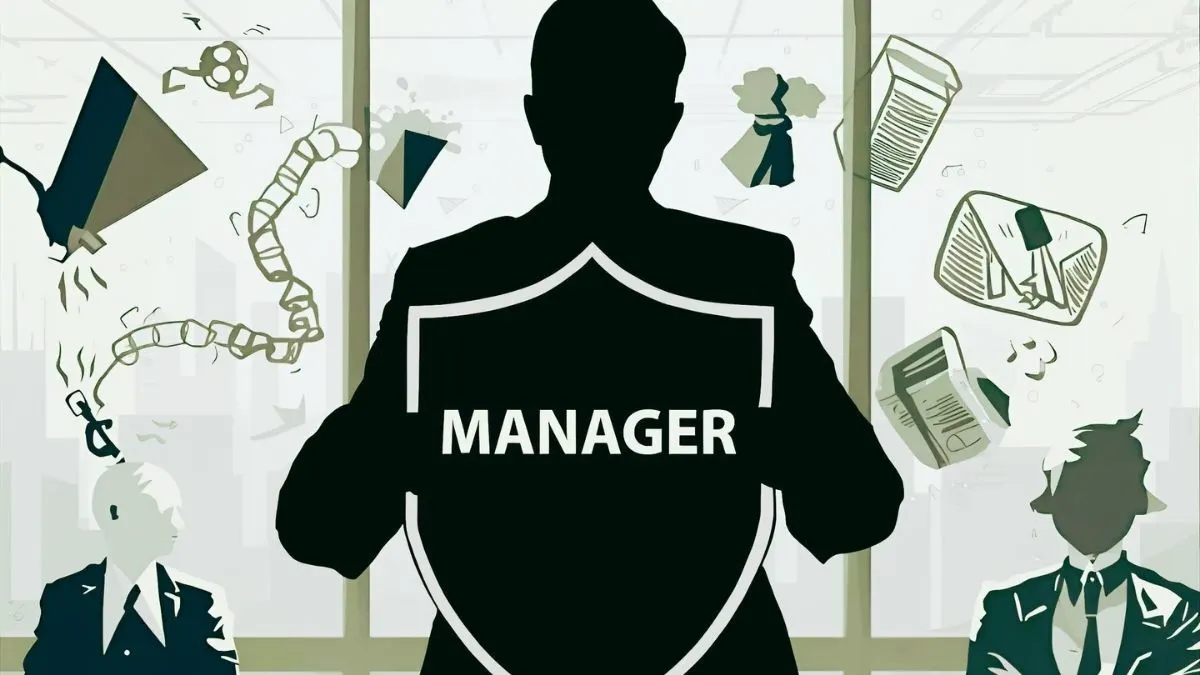
SITUATIONAL LEADERSHIP TRAINING
Situational leadership training for better team performance
One size fits nobody. A manager who treats every team member the same gets results from the few who match their default and loses the rest. Excellential teaches your managers to read where each person stands, flex their style for that person, and get results from the whole team.
- Practical style-flexing, not personality typing. Your managers diagnose where each person stands and adjust in real time. No assessment labels. No four-quadrant tests.
- Built around how Indian teams actually work. Seniority expectations, the discomfort of leading someone older, managing Gen Z alongside veterans, and the habit of over-directing. Excellential designs every role-play around these situations.
- 25+ years of L&D experience. 20,000+ professionals trained across 85+ organisations in IT, e-commerce, BFSI, manufacturing, pharma, retail, and startups.
- Flexible delivery. In-person, virtual, or hybrid. English, Hindi, and regional languages on request.
Tell us about your managers, and Excellential will design a programme around your team dynamics.






































KEY TAKEAWAYS
- Excellential’s situational leadership training is designed for managers leading people with different levels of experience, confidence, and task readiness.
- The recommended batch size is 15 to 25 managers.
- Delivery options include a two-day workshop, four virtual half-day sessions, a six-week blended journey, and customised leadership-development formats.
- Managers map their current direct reports against the work each person is expected to perform.
- Each participant develops a leadership plan showing where direction, coaching, support, or delegation is required.
- A six-hour refresher can be conducted 12 to 18 months later for previously trained managers.
Help managers respond to individual development needs
Share the managers’ experience levels, team composition, and recurring people challenges. Excellential will recommend the appropriate programme format.
THE PROBLEM
Why one leadership style does not work for an entire team
The manager who micromanages the senior developer with 12 years of experience. The same manager who gives zero direction to the new hire and calls it “empowerment.” The experienced employee feels suffocated. The new hire feels abandoned. Both are underperforming. The manager is confused about why.
This is the most common leadership mistake Excellential sees in Indian organisations. Managers find one style that feels comfortable, usually directive, and apply it to everyone regardless of their experience, skill, or motivation.
The result: capable people leave because they feel controlled, and new people flounder because they feel unsupported. Excellential has written separately on why top individual contributors so often struggle as managers; the same default-style trap sits at the heart of it.
After two decades of delivering situational leadership training across Indian organisations, the same five patterns repeat in almost every engagement.

Across 85+ organisations, one pattern shows up more than any other. A manager finds one style that feels comfortable, usually directive. The manager applies it to everyone, regardless of who they are leading or what the work requires.
The capable senior people leave first. The new hires drift quietly for three months and then quit. The middle layer stays silent and waits.
None of this is a people problem. It is a leadership flexibility problem.
In India’s competitive talent market, a manager who cannot adapt loses the best people to companies where leaders know how to flex. Your retention problem may not be a compensation problem. It may be a manager stuck on autopilot.
The patterns that Excellential sees across every industry
1. Over-directing experienced people
The default that drives senior talent away.
Indian managers, especially in hierarchical organisations, default to telling. They assign tasks, check progress, and approve output. This works for a new hire learning the ropes. It drives an experienced professional to update their LinkedIn profile. The best people do not need direction. They need trust and space.
2. Under-supporting new hires and calling it autonomy
Freedom without structure is not empowerment.
“I do not want to micromanage, so I give everyone freedom.” That sounds progressive. In practice, the new hire has no idea what success looks like, receives no feedback for three months, and either develops bad habits or quits. Freedom without support is not autonomy. It is neglect.
3. Treating the team as one unit instead of individuals
One approach cannot serve four very different people.
The team meeting where everyone gets the same update, the same instructions, and the same check-in frequency. But the team has a mix. A star performer who needs a new challenge. A solid contributor who needs encouragement. A struggling employee who needs coaching. A new joiner who needs structure. One style fails three of them.
4. Confusing motivation with competence
Wrong diagnosis, wrong intervention.
A highly motivated new employee who lacks skills gets praised but not trained. A skilled employee going through a personal rough patch gets performance-managed instead of supported. Matching the wrong intervention to the wrong diagnosis makes every problem worse.
5. The seniority trap in Indian teams
The most uncomfortable and most common leadership challenge in India.
A young manager leading a team with members older and more experienced than themselves defaults to either over-deferring (avoiding giving direction to seniors) or over-asserting (proving authority through control). Neither works. The senior team member loses respect for a leader who cannot lead. The team watches and learns.
Situational leadership gives the manager a framework that works across age and tenure, where authority comes from accurate diagnosis and appropriate response, not from posturing.
Excellential built a similar readiness-focused approach in Building a Future-Proof Leadership Pipeline.
Deloitte’s research on the multigenerational workforce found that only six percent of leaders feel equipped to lead such a workforce; the gap this programme is designed to close.
THE PROGRAMME
What this situational leadership training covers
Six modules. Each is built around the situations Indian managers face every week. No lectures. No personality labels. Realistic role-plays, real team mapping, and a personalised leadership plan for every direct report.
Module 1
The four leadership styles and your default
- The four core styles are Directing, Coaching, Supporting, and Delegating.
- Your default style: self-assessment and group debrief.
- The cost of style mismatch, with real examples from Indian workplaces.
- Why does no single style work for every person or every situation?
Module 2
Diagnosing developmental levels
- Assessing competence and commitment for each task, not each person overall.
- Why does the same person sit at different levels on different tasks?
- Reading the signals: motivated but unskilled, skilled but disengaged, capable but cautious, and self-reliant.
- The most common diagnosis errors in Indian teams: confusing politeness with commitment, tenure with competence, and silence with agreement.
Module 3
Style flexing in practice
- Role play: directing a new hire without micromanaging.
- Role play: coaching someone skilled who is losing motivation.
- Role play: supporting a capable employee through a personal rough patch.
- Role play: delegating to a self-reliant employee without abandoning them.
Module 4
Leading across age and seniority
- The two failure modes when leading older or more senior team members are over-deferring and over-asserting.
- Respect-without-deference conversation. Managing across generations: Gen Z, millennials, and veterans on the same team.
- The peer-to-boss handoff when a former peer becomes a direct report.
Module 5
Building leadership conversations
- Running one-on-ones that move people up the developmental ladder.
- Calibrating feedback frequency to developmental level.
- The 90-day review rhythm.
- The conversation that re-engages a capable-but-disengaged senior. Stepping back when you should and stepping in when you must.
Module 6
Your team leadership plan
- Mapping every team member to their developmental level on the tasks that matter most.
- Building a personalised leadership approach for each person.
- Planning the development conversations that move each person toward independence.
- The 30-day, 60-day, 90-day cadence for reassessment.
Want the detailed programme outline?
Excellential will tailor the modules to your industry, team composition, and specific leadership challenges.
OUR APPROACH
How Excellential teaches situational leadership
If your managers do not change their behaviour by Monday morning, the workshop will have failed. Excellential designs every part of the programme for transfer to the workplace, not for the classroom.
Pre-programme discovery
Excellential spends two to three hours with your HR team and a few of the managers. We learn the team compositions they lead, the leadership challenges they face, and the situations they avoid. Each participant then receives a short self-assessment, so every manager walks in already knowing their default style.
Real workplace role plays
Excellential builds scenarios from the exact situations Indian managers face every week. Directing a new hire without micromanaging. Coaching a skilled employee who is losing motivation. Delegating to a senior team member without abandoning them. Giving feedback to someone older.
Real team mapping during the workshop
Each manager maps their direct reports to developmental levels on specific tasks. Each manager leaves with a personalised leadership plan for actual people on their team, not a theoretical framework.
Style flexing under pressure
The model is simple to understand. Applying it is hard, especially when you are tired or rushed. Excellential designs practice sessions where the manager’s default style fails them, so they learn to recognise the moment and flex.
Excellential explores this application gap more broadly in Leadership Development: What Actually Works (And Why Most Programs Fail).
30-day action plans tied to real people
Every participant leaves with three specific behaviour commitments tied to actual direct reports on their team. Excellential follows-up at 30 and 60 days.
Measurement aligned to the Kirkpatrick Model
Excellential measures reaction during the workshop, learning through scenario assessments, behaviour change at 30 and 60 days, and team-level outcomes such as engagement scores and retention in trained managers’ teams.
Behaviour change by Monday morning, not slides.
See how Excellential’s approach works for managers like yours.
LEARNING OUTCOMES
What your managers will do differently after this programme
- Name their own default leadership style and the situations where it fails them.
- Diagnose each direct report's developmental level on at least three key tasks.
- Recognise the four leadership styles in their own behaviour and in the behaviour of other managers around them.
- Run a one-on-one conversation that moves a competent-but-disengaged team member back toward ownership.
- Give direction to a new hire with enough structure to set them up for success, without slipping into micromanagement.
- Hold one previously avoided conversation with a senior team member, including one who is older than the manager.
- Delegate a real task to a real person with the right level of follow-up for that person's developmental level.
- Build a personalised leadership plan for each direct report and set a 90-day rhythm for reviewing and updating it.
- Spot the most common diagnosis errors: confusing politeness with commitment, confusing tenure with competence, and confusing silence with agreement.
- Apply situational leadership principles to remote and hybrid team members, including those they rarely see in person.

RESULTS
What changes after this training
For the manager
- Ability to diagnose what each team member needs and adjust accordingly.
- Confidence in leading people across different experience levels and ages.
- A personalised leadership plan for every person on their team.
- Less frustration from applying the same approach and getting different results.
- Stronger one-on-one relationships built on genuine understanding.
For the organisation
- Higher team engagement, because people feel led appropriately rather than generically.
- Faster development of new hires who get the right level of support from day one.
- Better retention of experienced professionals who get the trust and space they want.
- More consistent management quality across teams and departments.
- A shared leadership language that managers across teams use to discuss and develop their people.
- Measurable behaviour change that links back to team-level engagement and attrition data.
Ready to build managers who can lead anyone?
Tell us about your team, and Excellential will recommend the right format and cohort design.
Testimonials
DELIVERY
Format and delivery options
| Format | Duration | Best for |
|---|---|---|
| Intensive workshop | 2 full days, in-person | Deep style-flexing practice with role plays |
| Virtual programme | 4 half-day sessions over 2 weeks | Distributed managers with practice between sessions |
| Blended journey | 1-day workshop + 3 virtual follow-ups over 6 weeks | Sustained application with real team coaching |
| Custom format | Flexible | Integrated into broader leadership development journeys |
Excellential delivers situational leadership training across India, including Bengaluru, Mumbai, Delhi, Hyderabad, Coimbatore, Chennai, Pune, Gurugram, Noida, and Kolkata. Virtual delivery reaches managers anywhere in India and abroad. English and Hindi are standard, with regional languages on request. Recommended batch size: 15 to 25 managers.
WHO IS IT FOR
Who should attend this situational leadership programme?
Designed for people leaders at any career stage where flexibility, judgment, and the ability to read each individual become more important than the manager’s own technical excellence.
People managers at any level
Who lead teams with varying experience and motivation levels, and find that their default style works with some team members but not others.
New managers
Those who default to one style because they have never been taught alternatives. Especially those promoted on individual excellence and are now responsible for people.
Managers leading multigenerational teams
Where age and seniority make leadership uncomfortable. Gen Z alongside veterans. Young leaders managing older or more senior team members.
Team leads in fast-growing companies
Where the team composition changes every quarter, and the manager has to adapt their style to new hires, new functions, and shifting priorities.
Technical team leads
Engineers, developers, data scientists, and analysts who have moved into team lead roles. The seniority mix on technical teams makes situational leadership especially relevant.
HR, L&D, founders, and senior leaders
Who wants one leadership language across the organisation. HR professionals coaching managers. Founders and CXOs setting.
Post situational leadership training programme
One-day refresher for trained managers: A focused six-hour session for cohorts that completed the programme 12 to 18 months ago. Excellential re-anchors style flexing, revisit team mapping with current direct reports, and recalibrate the 90-day rhythm. Best for cohorts of 8 to 15.
First-Time Manager Training: For managers in their first 12 months who need foundational management skills before situational thinking sits comfortably. Pairs naturally as a feeder programme.
Feedback Training Programme: Direct, structured feedback conversations across performance levels and tenure gaps. Useful for managers who diagnose well but stumble on the feedback itself.
Not sure if this fits your team?
Excellential will help you assess the need and recommend the right approach. No hard sell.
WHY EXCELLENTIAL
Why organisations choose Excellential for situational leadership training
You have options. Licensed global programmes, generic four-stage frameworks, and individual trainers. Here is what makes working with us different.
Indian team realities, not Western templates
Age gaps, seniority expectations, and Gen Z alongside veterans. Every role play reflects the team realities your managers actually face, not a global curriculum lightly adapted for India.
Real team application
Managers map their actual team during the workshop. They leave with a personalised leadership plan for each direct report, not a theoretical model.
Practice, not just theory
The model is simple. Applying it is not. Excellential spends most of the workshop practising style flexing in uncomfortable, realistic scenarios where the manager’s default style fails them.
Integrated with your L&D journey
Connects with Excellential’s First-Time Manager, Delegation & Feedback, and Performance Management workshops for a complete development path.
20,000+ professionals trained
25+ years of cross-industry experience across IT, BFSI, manufacturing, pharma, retail, and startups. Excellential has seen what works and what does not.
Measurable impact
Aligned to the Kirkpatrick Model. Excellential tracks behaviour change at 30 and 60 days, not only satisfaction scores. Where you want to track team-level engagement or retention, it partners on that, too.
Set your managers up to lead the people they actually have
Your best people do not need more direction. Your newest people do not need more freedom. They need a manager who can tell the difference and lead each person accordingly. Whether you need situational leadership training for one team or a multi-cohort rollout across the organisation, Excellential will understand your context first and design around it.
FAQS
Frequently asked questions
Is this the SLII® programme?
No. SLII® is a Blanchard trademark, delivered in India by Blanchard International and BYLD Group, and Excellential is not a Blanchard-licensed partner. Excellential’s programme is built on the underlying Hersey-Blanchard principles, which sit in the public domain. The exercises, role plays, and case scenarios are ours, designed for Indian workplaces.
Is this based on the Hersey-Blanchard model?
Yes. The four leadership styles and the developmental-level diagnosis come from the Hersey-Blanchard model. The exercises, role plays, and case scenarios are ours, designed for Indian workplaces.
Will my managers receive a certification?
They receive a completion certificate from Excellential. If brand-licensed certification is the priority, a Blanchard SLII® program is the right route. If observable behaviour change on Monday morning is the priority, ours is.
How is this different from DISC or MBTI?
DISC and MBTI tell you about a person. Situational leadership tells you how to lead each person on each task. The two work well together; many clients use both.
Can a younger manager use this to lead older or more senior team members?
Yes. This is one of the most common situations the program addresses. Module 4 covers the respect-without-deference conversation, scripts for delegating to senior team members, and the discomfort of giving feedback to someone older.
Does this cover remote and hybrid teams?
Yes. The diagnostic principles apply identically. The cues you read change. Module 3 includes scenarios for distributed teams.
Is this suitable for technical team leads?
Particularly so. Technical leads usually rise on individual excellence and rarely receive formal management training. The seniority mix on technical teams makes situational leadership especially relevant.
How do you measure impact?
We align measurement to the Kirkpatrick Model: reaction, learning, behaviour change at 30 and 60 days, and team-level outcomes where you want to track them.
Can the programme be customised for our company?
Yes. Role plays, scenarios, and team mapping adapt to your industry, team composition, and specific challenges.
What is the ideal group size?
15 to 25 managers. We have run effective sessions for groups as small as 8 and as large as 35.
Do you deliver in Hindi or regional languages?
English and Hindi are standard. Regional languages on request.
Is this available in Bengaluru and other Indian cities?
Yes. In-person delivery across Bengaluru, Mumbai, Delhi, Hyderabad, Pune, Chennai, Gurugram, Noida, Coimbatore, and Kolkata. Virtual delivery reaches teams anywhere.
What makes Excellential different from other situational leadership providers in India?
Most providers either deliver a licensed global program or repackage a generic four-stage framework. We do neither. We build the program around Indian team realities: leading across age and seniority, the over-directing habit, the silent middle, and the discomfort of coaching someone older. Your managers leave with a personalized plan for each direct report, not a certificate and a forgotten model.