RESILIENCE TRAINING FOR EMPLOYEES
Resilience training for employees who recover fast and keep pushing
Pressure is not the problem. Most Indian workplaces run on it. The problem is what happens to a team that absorbs setback after setback with no way to recover and no reason to keep pushing.
This resilience training for employees builds the two things that keep people going: the ability to recover from a hard week and the self-motivation to start the next one without being chased.
- Lasting capacity, not a mood lift. Excellential builds a team that recovers faster in six months, not one that feels great for a weekend.
- Self-motivation is built in. Most resilience programmes stop at recovery. Excellential adds the drive to start again, so the effort does not depend on a manager watching.
- Built for the Indian context. Long hours, hierarchy, the never-say-no reflex, and the family-and-work load. Not imported frameworks.
- Facilitated and reinforced. Offline-first sessions plus a 30-day follow-up, so the habits actually hold.
Tell us about your teams and the pressures they carry, and Excellential will design a programme around them.











































KEY TAKEAWAYS
- Built for teams showing a slow decline, not a single crisis: sales teams facing rejection, customer service teams absorbing daily frustration, and stretched operations and delivery teams.
- Excellential names six patterns of low resilience: the long-hours trap, setbacks that linger for weeks, motivation that depends on the manager watching, the never-say-no reflex, quiet disengagement, and recovery treated as weakness.
- The programme runs six modules: how resilience works, bouncing back from setbacks, building self-motivation, managing energy long-term, protecting drive through boundaries, and building lasting habits.
- People recover from setbacks in days rather than weeks and sustain effort without needing constant supervision.
- Excellential treats resilience as a distinct capability from stress management: stress management handles the pressure spike; resilience rebuilds capacity for the months after.
- Teams facing acute day-to-day pressure should start with Excellential's stress management training; this programme is for sustained drain and falling drive.
Share whether your team is fighting a single crisis or a slow decline, and Excellential will recommend resilience training, stress management, or both.
THE PROBLEM
A workforce that shows up but has stopped pushing
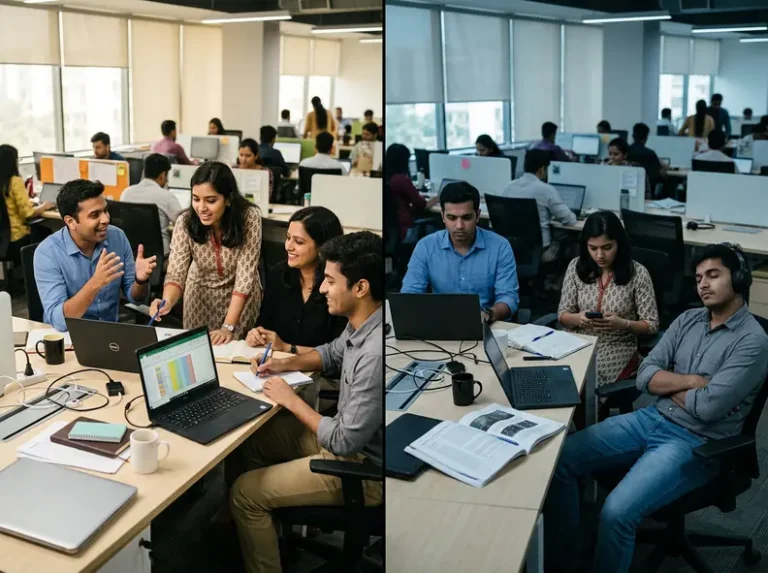
Indian employees are not quitting in the numbers you would expect. They are doing something quieter and more expensive. They are staying and switching off.
Gallup’s State of the Global Workplace 2026 recorded global engagement falling to 20% in 2025, its lowest level since 2020. India usually sits above that global average, but the 2026 report carries a sharper warning closer to home: in 2025, South Asia, primarily India, saw the steepest fall in manager engagement of any region in the world, an eight-point drop in a single year. Gallup calls the wider pattern the “Great Detachment.” With the job market tight, people are not leaving. They are staying in their seats and quietly checking out.
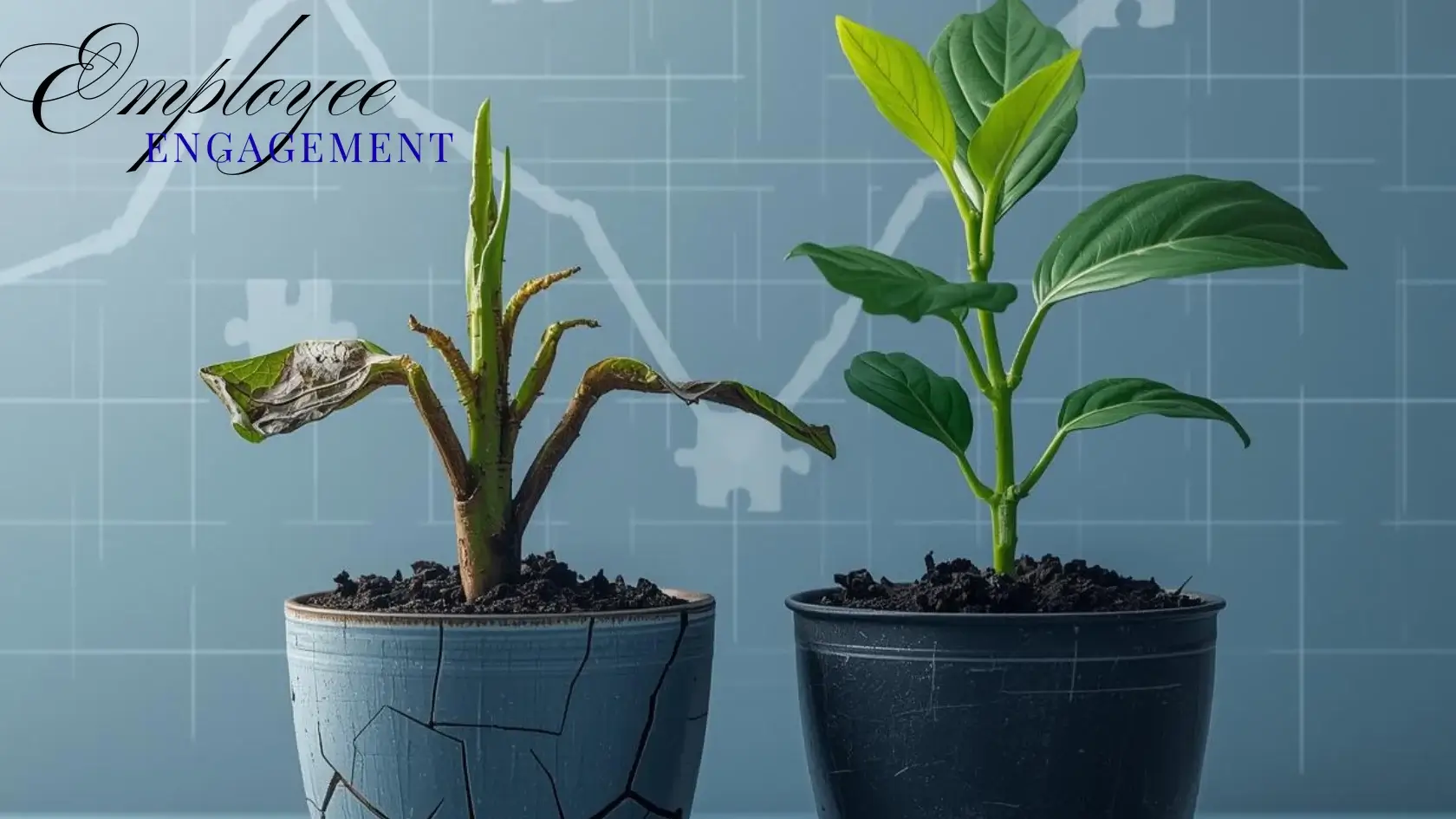
This is not a stress problem. Stress is the spike on a bad day, and people can be coached to handle a spike. This is the slow drain that comes after: the analyst who used to volunteer ideas and now waits to be told; the salesperson who stops chasing the hard accounts; the manager who quietly stops caring whether the target is hit.
Two forces are missing in that picture, and they are the two that this resilience training programme builds. The first is resilience, the capacity to take a setback, a lost deal, a public correction in a review, or a project that collapses after months of work and recover instead of carrying it for weeks. The second is self-motivation, the internal drive to start the next hard thing without a manager standing over the desk. A team can have one without the other. The strongest teams need both.
THE DISTINCTION
Resilience is not stress management, and the difference matters
These two get bundled together, and bundling them is why so much well-being training fails to move anything. If your people keep coping with crises but still burn out over the year, you have trained stress management and skipped resilience.
Stress management - the ambulance
About the moment. It teaches people to handle the pressure spike: the deadline week, the angry client call, the day everything lands at once. It matters, and Excellential runs a separate programme for it. But it does nothing for the slow drain that comes after.
Resilience - the fitness regime
About recovery and the long run. It is what lets someone absorb a hard quarter and still bring energy to the next one. It is the difference between a setback that costs a day and a setback that costs a month of motivation. This page is the second half.
What low resilience and low motivation look like on the ground
These are the patterns that Excellential sees inside Indian teams. Most leaders recognise several at once.
1. The long-hours trap that backfires
The team that never goes home is your most depleted.
The culture rewards staying late, so people stay late, and output quietly falls. Stanford research by John Pencavel found that productivity rises with hours only up to around 49 hours a week. Past that, it flattens and then drops, and someone working 70 hours produces no more than someone working 55.
2. Setbacks that linger
A one-day recovery becomes a three-week slump.
A lost pitch or a hard performance review knocks someone flat, and they stay flat. The recovery that should take a day takes three weeks of low effort, missed follow-ups, and avoided risk.
3. Motivation outsourced to the manager
Drive that drops the moment the boss looks away.
The team works hard when the boss is watching and coasts when they are not. Drive is external, so the moment supervision drops, so does effort. This is the most expensive pattern of all, because it caps how much any manager can lead.
4. The "never say no" reflex
Agreement now, collapse later.
People accept every task to avoid looking uncommitted, then collapse under the load they agreed to. The inability to push back is read as dedication right up until it becomes attrition.
5. Quiet disengagement
No drama, just a slow withdrawal of effort.
The person who used to volunteer now waits to be assigned. No complaint, just a steady withdrawal of the discretionary effort that used to make them valuable.
This quiet withdrawal is the same pattern Excellential traces in Why Employee Engagement Initiatives Don’t Work.
6. Recovery treated as weakness
Rest reads as slacking, so nobody recovers.
In a culture that glorifies sacrifice and constant availability, rest reads as slacking. So nobody recovers properly, and the whole team operates a little more depleted every month.
What does disengagement cost inside one firm?
Disengagement is not a soft cost. Gallup’s 2026 report puts the global cost of low engagement at around $10 trillion a year in lost productivity, close to 9% of global GDP. That is the macro picture. Here is what it can look like inside one firm.
Take a 200-person company. Say even a third of them have quietly disengaged, not a stretch in the current climate, each delivering, conservatively, 20% below their engaged capacity on an average salary of ₹8 lakh a year. That is on the order of ₹1 crore a year in output you are paying for and not receiving.
This figure is illustrative. It is a model built from the headcount and assumptions above, so you can re-run it against your own numbers. It is not a quoted statistic.
Then there is the replacement cost of the ones who do eventually leave, the institutional knowledge that walks with them, and the drag on the people who stay and watch it happen. Resilience and self-motivation are not well-being perks. They are the difference between a workforce you pay for and a workforce that pays you back.
THE PROGRAMME
What this resilience training for employees covers
Six modules. Built around your teams’ real pressures, not generic mindfulness exercises.
Module 1
How resilience actually works
What resilience is and is not, and why it is a trainable capacity rather than a personality trait you are born with or without. The science of recovery, in plain language, so people stop treating burnout as a character flaw and start treating it as a system to manage.
Module 2
Bouncing back from setbacks
The practical skill of recovering from a lost deal, a failed project, or a hard review. How to separate the setback from the self-story, learn from it without dwelling, and re-enter the work with energy instead of dread.
Module 3
Self-motivation that does not depend on the boss
Where internal drive comes from, and how to build it. Connecting daily work to something the person cares about, and setting goals that pull effort out of people rather than goals that must be pushed onto them. This is the module that frees managers from being the only source of their team’s energy.
Module 4
Managing energy for the long run
Not in-the-moment crisis coping, but the endurance question: how to sustain output across a long stretch without depleting the team. Why the 49-hour week is a real ceiling and how to spot the line between working long and working depleted before a team crosses it.
Module 5
Protecting drive: boundaries and asking for help
The slow drain often starts when people cannot push back. The hardest skills in a hierarchical, face-saving culture: declining a task without looking uncommitted, asking for support without losing face, and, for managers, making it safe for a team to do both.
Module 6
Building the habits that last
Turning the programme into daily practice. Small, repeatable routines that sustain motivation and recovery long after the session ends. Each team leaves with a practical playbook for their own work.
Want a detailed programme outline for your teams?
Excellential will tailor the modules to the pressures your people actually carry.
OUR APPROACH
How Excellential builds resilience that lasts
Excellential does not run a feel-good day that fades by Friday. A motivational session lifts the mood for a week and changes nothing the month after. Resilience and self-motivation are capacities, and capacities are built through practice and reinforcement.
Excellential builds capacity, not a mood
The goal is a team that recovers faster and pushes harder six months from now, not one that feels great for a weekend. Everything is designed for durability.
Excellential works with your real pressures
Generic exercises produce generic results. Excellential builds the practice around the actual setbacks, workloads, and pressures your teams face, so the skills transfer to the work that is draining them.
Excellential makes recovery legitimate
In a culture that treats rest as weakness, the facilitator’s job is to make recovery and boundary-setting respectable. When the room agrees that managing energy is professional, not soft, the habits finally stick.
THE RESULTS
What your teams will be able to do
By the end of the resilience training programme, your people will recover faster, sustain their own drive, and protect it under real workload.
For your people
- Recover from setbacks in days instead of weeks.
- Sustain effort without constant supervision or external pressure.
- Say no, set boundaries, and ask for help without losing standing.
- Carry small recovery and motivation habits that hold up under real workload.
For the business
- Drive that comes from inside, not from a manager hovering over the desk.
- Energy managed across a long stretch, not just survived in a single crunch.
- Less burnout and less of the attrition that quietly follows it.
- Discretionary effort returning where it had quietly drained away.
Testimonials
WHO IS IT FOR
Who this resilience training is for
Any team carrying sustained pressure. It is most valuable when the issue is not a single crisis but a slow decline: people who still show up but have stopped pushing and teams that cope with every emergency yet burn out across the year.
Sales teams
Riding the rejection cycle, where each lost deal chips away at the drive to chase the next hard account.
Customer service teams
Handling difficult interactions all day, absorbing frustration that compounds across a shift and a quarter.
Operations and delivery teams
Under constant deadline load, where the line between working long and working depleted blurs fast.
Managers leading depleted teams
Trying to keep people motivated when their own energy is stretched, and they cannot be the only source of the team’s drive.
Startups and SMEs
Asking people to do more with less, where a thin team cannot afford a slow recovery from every setback.
Enterprises watching engagement slide
Where the numbers are quietly falling and the cause is sustained drain, not a single visible crisis.
Not sure if this fits your situation?
If your problem is acute, day-to-day pressure, start with stress management. If it is a sustained drain and falling drive, this is the programme. Excellential will help you tell the difference.
WHY EXCELLENTIAL
Why organisations choose Excellential for resilience training for employees
Most providers sell one bundled “well-being” programme. Excellential separates coping-in-the-moment from recovering-over-time, and it builds the second properly.
Resilience, not relabelled stress management
Most providers blur coping and recovery into one well-being session. Excellential treats recovery over time as its own capability and build it properly, so you get two distinct skills, not one vague programme.
Self-motivation is built in
Almost every resilience programme on the market stops at recovery. Excellential adds the drive to start again because a team that recovers but still waits to be pushed has only solved half the problem.
Built for the Indian context
The 49-hour reality, the never-say-no reflex, the hierarchy that makes asking for help feel risky, the family-and-work double load. Excellential builds for the workplace where your people actually work.
Capacity, not a mood lift
No motivational-speaker theatre. The programme is designed for what your teams do six months later, with a 30-day follow-up to make it stick.
Facilitated, so the change is real
Recovery habits and boundary-setting take hold where it becomes safe to admit depletion. Lasting capability is built through facilitation, practice, and feedback. A skilled facilitator creates that permission and the reps that make it stick.
25+ years of L&D depth
A practice spanning 25+ years, behind a company built in 2015 that has trained 20,000+ professionals across 85+ Indian organisations. Behaviour-change work, not a wellness app with a workshop bolted on.
Build the capacity that keeps your people going
A team that has stopped pushing rarely announces it. The signs are quiet: slower recovery, lower effort, energy saved for somewhere else. Build resilience and self-motivation properly, and you get the opposite. That capacity is built, not hired. Excellential builds it.
Excellential covers a related capacity-building theme in The Balloon Lesson: Why Capability Beats Hustle Every Time.
FAQS
Frequently asked questions
How is resilience training for employees different from stress management training?
Stress management teaches people to handle the pressure of the moment, the deadline week, and the difficult call. Resilience teaches them to recover from setbacks and sustain effort over the long run. One is the ambulance, the other is the fitness regime. Many clients run both: stress management for the immediate firefight and resilience to stop the fires draining the team over time.
Isn't resilience just personality? Can you actually train it?
Resilience is a capacity, not a fixed trait. People can learn to recover faster, manage their energy, and sustain motivation, the same way they learn any skill, through practice and reinforcement. The programme is built around that, which is why the 30-day follow-up matters.
We've tried motivational sessions, and they wore off in a week. How is this different?
A motivational session lifts mood; it does not build capacity. We are not running motivational theatre. We build habits and skills; your teams practise on real work, then we reinforce them 30 days later so they hold. The test is what people do six months on, not how they feel on the day.
Our culture rewards long hours. Won't "managing energy" sound like slacking?
That tension is exactly what the programme addresses. We make recovery and boundary-setting professionally legitimate, and we show, with Stanford research, that beyond about 49 hours a week, extra time reduces output. The point is not working less for its own sake. It is sustaining performance instead of burning the team out.
Who should attend?
Any team under sustained pressure, including sales, service, operations, and the managers leading them. It works for individual contributors building their own resilience and for managers learning to keep depleted teams motivated.
Is the training delivered online or offline?
Offline-first, in your office, because the permission to recover and the habit-building happen best in the room. For distributed teams, we run live facilitated virtual sessions. We stay with the team live, not a recording left to play alone.
How long is the resilience training programme?
Half-day or full-day, depending on depth and how many teams you are running. For larger organisations, we run multiple cohorts. We recommend a format after a short scoping call.
How do we know it worked?
We agree on the signals upfront: recovery time after setbacks, sustained discretionary effort, and retention in the trained teams, and we revisit them at the 30-day follow-up. Resilience shows up in behaviour over weeks, so we measure over weeks, not on a feedback form at the door.
Can you tailor it to a specific team, like sales?
Yes. A sales team’s resilience challenge, constant rejection, looks different from operations’ deadline grind. We build the practice around each team’s real pressures and give each a playbook for their own work.
How soon can we start?
After a short scoping call to understand your teams and their pressures, we can usually schedule within two to three weeks.