

They had twenty-seven meetings. Not one proposal. Something was broken.
Enterprise deals die after the second meeting when one friendly contact controls the whole relationship. That contact can recommend but cannot decide. A disciplined enterprise sales process prevents this. It maps the full buying group early and builds relationships across finance, IT, procurement, and leadership. Then it qualifies the real decision, long before the forecast says ninety per cent.
The deal that everyone thought was safe
At an enterprise software company in Hyderabad, Aditya Verma ran what looked like the healthiest opportunity on the board. His team was selling a supply-chain platform to one of the country’s bigger pharma manufacturers. The deal was worth close to ₹4 crore over three years. And the client clearly liked them.
Sridhar, the manufacturer’s head of operations, took every call. He praised the demos. He invited the team back again and again. There was always one more module to show, one more question to answer, one more person to meet. Over nine months, the two sides met twenty-seven times. Aditya’s forecast showed the deal at ninety per cent. His sales head stopped asking about it, because it looked safe.
Then, one Tuesday, Sridhar sent a short, warm email. The company had decided to go with another vendor. He thanked the team for their patience and wished them well.
Aditya read it twice. Ninety per cent. Twenty-seven meetings. And not once, in all that time, had anyone on his side spoken to the person who signed the cheque.
Key takeaways
- A second meeting only buys access. A buyer who enjoys your company is not the buyer who holds the budget or the final say.
- A complex B2B buying decision now involves around 6.8 stakeholders, often more. A deal threaded through one person is one reassignment away from collapse.
- A strong enterprise sales process maps the buying group before the second meeting. It names who owns the budget, the technical call, the daily use, and the quiet veto.
- Arm your champion with the numbers, the risk answers, and a one-page business case. He wins the meetings you never attend.
An enterprise sales process is a structured, repeatable way to win complex B2B deals: it maps every decision-maker and qualifies budget, authority, and timeline before the close.
Why a second meeting feels like winning
A second meeting feels like victory. Someone heard your pitch, did not say no, and asked you to come back. In a long enterprise sale, that small yes works like a drug. It tells the team the deal is alive, the relationship is strong, and the momentum is real. So they pour their energy into the person who keeps agreeing to more meetings. They read every warm word as a buying signal.
But a meeting is not a milestone. A buyer who enjoys your company is one creature. A buyer who holds the authority, the budget, and the mandate to choose you is another. Aditya’s team mistook access for progress. They had built a warm relationship with a man who could recommend but could not decide.
The autopsy
The company later ran an honest review of the lost deal. The cause was neither the product nor the demo nor the price. It was the shape of the relationship. Every one of those twenty-seven meetings ran through a single person.
The team never sat with the chief financial officer. He saw the ₹4 crore as money for a new production line. They never met the head of IT. He worried about batch and patient data under regulatory scrutiny. They never spoke to procurement, which quietly favoured a vendor the company already used. And they never reached the managing director’s office, where the year’s real priority was export expansion, not internal systems.
Sridhar liked the platform. But Sridhar was one voice in a room the sellers had never entered. ATD, citing CEB research, reports an average of 6.8 stakeholders in a major B2B buying decision (ATD). More recent studies put the number higher still. Aditya had built a deep relationship with one of them and left the other six to a competitor.
A deal that hangs on one contact is not really a deal. It is a single thread. And single threads snap. Your champion gets reassigned, takes leave, loses an internal argument, or simply runs out of influence at the decision table.
Why this trap closes hardest in India
The single-thread trap shuts tightest in Indian enterprise selling. The reasons have little to do with skill.
Hierarchy runs deep here. When Sridhar is your contact, calling the CFO behind his back feels like a breach of respect. Almost an insult. So, sellers wait for permission that never arrives. They let one relationship stand in for an entire organisation.
Our instinct for relationship-led selling makes it worse. We invest warmth in the person who receives us well. That warmth is genuine and mutual. And that is exactly why it blinds us. A polite Indian buyer rarely delivers a flat no. He says, “very interesting”, “let us take this forward, “do send us the details”. The seller hears intent. The buyer meant courtesy.
Few sellers ask the one question that breaks the spell. They never say: “Besides yourself, who else will weigh in on this decision, and may we meet them?” It feels pushy, even arrogant. So, they leave it unasked and stay blind to the very people who will decide their fate.
What an enterprise sales process looks like
A real enterprise sales process exists to prevent exactly this. It does not replace relationships. It makes sure you build enough of them, with the right people, before a deal can quietly die.
Map the buying group early.
Before the second meeting, a disciplined team already asks four questions.
- Who owns the budget?
- Who owns the technical decision?
- Who uses the platform every day?
- And who can quietly kill it?
Excellential teaches sellers to name these roles for every live deal. Any blank is a risk, not a detail.
Multi-thread on purpose
One seller should not funnel everything through one contact. The account executive works with the economic buyer. A technical specialist speaks to IT. A senior leader connects with the client’s leadership. If one thread goes quiet, the deal still stands on the others.
Arm your champion
A good process equips the champion instead of leaning on him. Sridhar could not sell inside his own company. Nobody had given him the numbers, the risk answers, or the one-page business case for the CFO’s room. Equip the champion, and he wins the meetings you will never attend.
Qualify the decision itself.
Finally, qualify the decision itself: the budget, the approval steps, the real timeline, the competing priorities. Then a “ninety per cent” forecast reflects the buyer’s reality, not the seller’s hope. These habits sit at the heart of Excellential’s B2B Sales Training. They carry into the longer game of holding complex accounts in Excellential’s Key Account Management Training.
The same shift runs through Excellential’s blog on Consultative Selling: From Pushing Products to Building Partnerships: from pitching one person to aligning a whole group. It matters after the deal closes, too, which Excellential covers in Client Retention Is the New Acquisition. And when an entire organisation stops working through narrow channels, the change is real. Excellential’s work on breaking down silos inside a large manufacturer tells that story from the inside.
The rooms you never entered
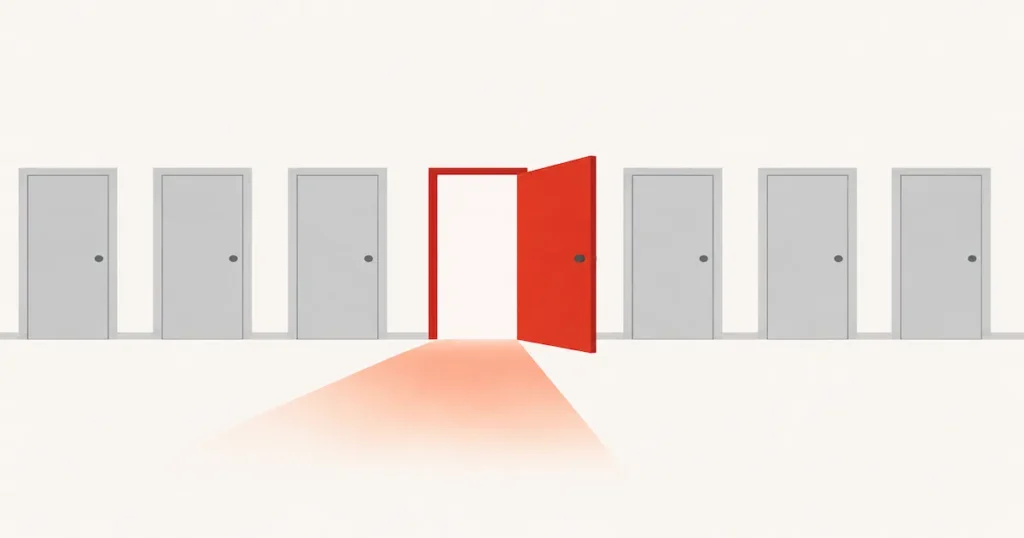
Aditya’s twenty-seven meetings did not fail for lack of skill. They failed because everyone led to the same chair. In a complex sale, one friendly contact is a single door into a building of many rooms. The deal lives or dies in the rooms you never enter.
By the second meeting, a strong team already knows every person who will shape the decision. It has a plan to reach each of them. That is the difference between a relationship and a sale.
Enterprise Sales Process FAQs
What is an enterprise sales process?
An enterprise sales process is a structured approach to winning complex, high-value B2B deals. It maps every stakeholder in the buying group. It builds relationships across finance, IT, procurement, and leadership, rather than one contact. Then it qualifies the budget, authority, and timeline so the forecast reflects what the buyer will actually do.
Why do enterprise deals die after the second meeting?
Deals stall when a seller funnels every meeting through one friendly contact who can recommend but cannot decide. The relationship feels warm, and the forecast looks safe. But the seller never engages the people who control the budget and the final choice. A competitor who reaches them quietly wins.
What is multi-threading in B2B sales?
Multi-threading means building relationships with several stakeholders at once, instead of routing everything through a single contact. The account executive works with the economic buyer. A technical specialist speaks to IT. A senior leader connects with client leadership. If one thread goes quiet, the deal still stands.
How many stakeholders are involved in an enterprise B2B deal?
CEB research found an average of 6.8 stakeholders in a complex B2B buying decision. More recent studies put the number higher still. That is why a deal built on one contact stays fragile. It leaves the other decision-makers, in finance, IT, procurement, and leadership, for a competitor to win.
How do you stop a deal from depending on a single contact?
Map the buying group before the second meeting. Name the person who owns the budget, the technical decision, the daily use, and veto power. Treat any blank as a risk. Multi-thread deliberately across those roles. Arm your champion with the numbers and the business case, so he can sell internally when you are not in the room.
If your team keeps getting invited back but rarely wins the signature, the pitch is probably not the problem. Let us look at how your deals are really built.