
It’s a story I have seen play out many times in my 20 years of working with organizations big and small.
Shweta Nair, L&D Head at a mid-sized Bengaluru-based logistics company, ran three back-to-back performance improvement workshops in Q3. Attendance was strong. Feedback forms glowed. Her MD called it a success. Six months later, the numbers hadn’t moved. Not one action plan from those workshops had been reviewed. Shweta wasn’t incompetent; she had done everything right. The problem was that no one had defined what “right” looked like after the training room emptied.
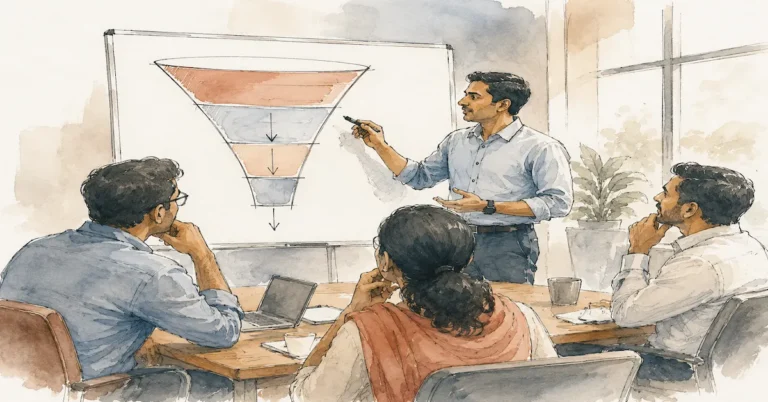
The business says, ” We need to improve performance”. HR says, Let’s conduct training. Trainers deliver two or three days of workshops full of energy, ideas, and action plans.
And then? Silence. The plans stay on paper, action items sit in slides, untouched, and everyone returns to the daily grind.
What went wrong?
The Perfect Plan That Fails in Execution
Organizations rarely struggle with making performance improvement plans. Whether it’s boosting sales revenue, improving NPS, or meeting project timelines, the intent is strong, the goals are clear, and the plan looks flawless on paper.
But when it comes to execution, suddenly cracks appear. Why? Because most reviews become about “what I didn’t like” rather than “how I can help you grow.”
Instead of feedback that inspires improvement, employees often leave with a list of complaints, not solutions.
Training Without Measurement = Effort Without Impact
Here’s the reality: Most training is designed for 1, 2, or sometimes 3 days. Everyone leaves motivated. But what happens after?
- Nobody measures effectiveness. HR rarely compares pre- and post-training data.
- No one tracks the action plan. HR feels, “My job was to get the training done.”
- Business leaders don’t revisit. They say, “We don’t have time to look back.”
The result? A cycle of training investments that look good in reports but don’t transform performance on the ground.
According to research published by EY India, organizations that fail to measure training effectiveness see an average of 45% of learning lost within one week of the program ending. The investment happens. The impact doesn’t.
Harvard Business Review puts it plainly: without clear performance objectives and manager reinforcement after training, the same problems persist no matter how many workshops you run.
The Shift: From Training Events to Performance Journeys
If organizations want real performance improvement, the mindset must change. Organizations must stop treating training as an event and as a journey.
This journey includes:
- Pre-Training Alignment: Clearly define what success looks like, with measurable targets.
- Immersive Training Delivery: Practical sessions that address real workplace challenges.
- Post-Training Action Plans: Assign ownership for applying learnings on live projects.
- Effectiveness Measurement: Pre- and post-data comparisons to check progress.
- Sponsorship from Leaders: Business must stay invested, not just HR.
A Pune-based manufacturing firm we worked with ran a six-month performance journey, not a three-day event. By month four, team leads were tracking their own action plans without HR prompting them. That shift from HR-driven to self-driven is what performance improvement actually looks like.
A New Way Forward
Performance improvement isn’t about “fixing what went wrong.” It’s about creating a system where people feel supported to grow.
When employees hear, “This is how I want to help you succeed,” it sparks ownership. When businesses track execution, it creates accountability. And when HR and leaders work together, training starts doing real work instead of just filling a box.
The next time you plan performance improvement training, pause and ask:
- Are we measuring effectiveness?
- Are we committed to the post-training journey?
- Are we helping employees grow, or just ticking off an HR activity?
Because performance improvement doesn’t happen in the classroom. It happens when learning moves into action and action moves the business forward.
Shweta eventually rewrote her entire training model. The fourth workshop she ran came with a 90-day accountability tracker, monthly check-ins, and a sponsor from the business leadership team. The numbers moved. They always do when the journey doesn’t end on Day 3.
At Excellential, this is the philosophy we carry: Performance Improvement is not an event, it’s a sustained journey of growth.