
Excellential’s Women in Leadership Accelerator lifted women in senior roles 30% within two years at a 10,000-employee Indian telecom company.
The Women in Leadership Program Case Study That Reshaped One Indian Telecom’s Succession Pipeline
When a leading Indian telecom company looked at its senior leadership lineup in 2022, the numbers told a stark story. As a result, the CHRO and the CEO knew they had a strategic problem, not just a diversity issue. Importantly, this women in leadership program case study captures how a year-long accelerator changed the trajectory: 30% more women in Director, VP, and SVP positions within two years, and a succession pipeline that finally matched the diversity of the company’s customer base.
However, the challenge wasn’t unique to this client. Across India, large enterprises hire women in equal numbers at the entry level. Meanwhile, in Director-level conversations, the room has visibly thinned. Furthermore, by the time succession discussions reach the C-suite, three or four names typically circulate — and most are male. In fact, why women in leadership matters for business performance is well-documented across global research, but the gap on the ground keeps widening.
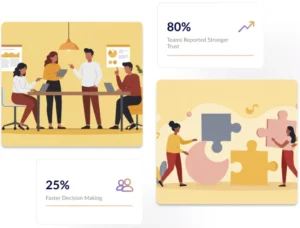
What makes the case study of these women in leadership programs worth reading is what changed and how. Specifically, the company saw a 30% increase in women in senior leadership positions, stronger succession depth across critical roles, and measurable improvements in team psychological safety. Notably, McKinsey’s Women in the Workplace 2025 report on India calls this pattern the “broken rung” and confirms what this engagement showed on the ground. Targeted accelerator programs outperform generic diversity training every time.
Ultimately, the difference came from a deliberate three-part design: targeted leadership coaching, strategic sponsorship rather than casual mentoring, and culture workshops for the entire senior leadership team. Read on for the full case study: the diagnosis, the year-long program structure, and the measurable results that followed.
Industry: Telecommunications
Client: A leading national telecom provider with over 10,000 employees.
The Challenge: A critical gap in gender diversity at senior leadership levels created a strategic vulnerability. Despite a nearly equal gender split at the entry level, women’s representation thinned at each step up the ladder. The result: a weak and non-diverse succession pipeline.