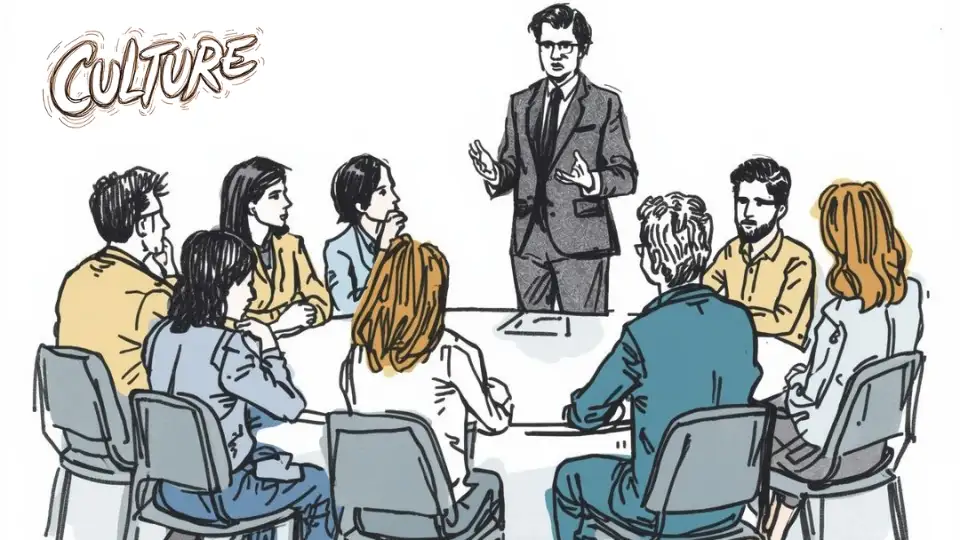
INCLUSIVE LEADERSHIP TRAINING
Inclusive leadership training: Get the best from every person on the team
The smartest person in your meeting is often the quietest, and most managers never hear from them. Inclusive leadership is the skill of running a team so that the best idea wins, not the most senior voice or the most confident one. Excellential’s inclusive leadership training builds that skill in the practical way Indian managers actually lead, so every person on the team contributes their best work.
- A trainable performance skill, not a diversity slogan. The frame is fuller contribution and better decisions, not compliance or awareness.
- Indian context, head-on. Hierarchy, the silent junior, the dominant senior, the meeting where no one disagrees with the boss.
- Behaviours managers apply in their next meeting. Facilitated and offline-first, reinforced about 30 days later so the change holds.
- 25+ years of L&D depth. 20,000+ professionals trained across 85+ organisations, delivered across India.
Tell us about your team, and Excellential will recommend the right format for your managers.































KEY TAKEAWAYS
- Excellential’s inclusive leadership training is designed for people managers who want wider participation and fairer contribution across their teams.
- The recommended cohort size is 12 to 20 managers, with adjusted facilitation available for groups of 8 to 25.
- Delivery options include a 3.5-hour workshop, a full-day workshop, a multi-cohort rollout, and live virtual sessions.
- Excellential adapts meeting simulations and decision exercises to the team’s seniority mix and working dynamics.
- Every participant receives a manager’s playbook for meetings and people-related decisions.
- Every format includes a follow-up after approximately 30 days to review how the selected behaviours are being applied.
Help managers draw out fuller team contribution
Share the meeting patterns, team dynamics and people decisions that need attention. Excellential will recommend the right practice format.
THE PROBLEM
Your best ideas are staying in people's heads
A typical Indian team meeting runs like this. The manager opens, a couple of senior people speak, heads nod, a decision lands, and everyone leaves. It looks efficient. It is expensive.
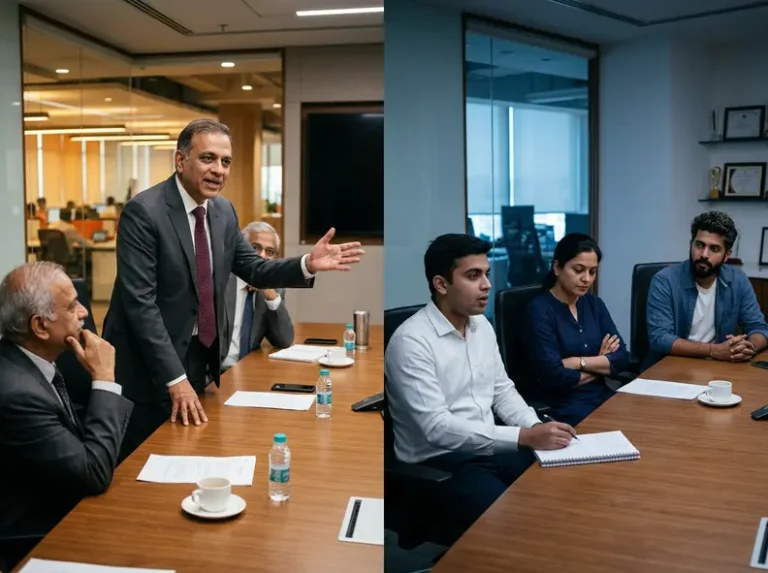
In that room, the junior analyst who spotted the flaw in the plan said nothing because correcting a senior in front of others is not done. The woman on the team who had the sharpest read on the client deferred because she had learned her interruptions get talked over. The new hire from a different background stayed silent because he could not tell whether disagreement was welcome or career-limiting. The meeting did not surface the best thinking in the room. It surfaced the most confident and the most senior.
This is not a problem you fix with a poster. It is a leadership skill problem. Inclusive leadership is the practical ability to run a team so every person contributes their best work, the quiet ones, the junior ones, the ones who do not look or sound like the manager. The mechanism behind it has a name: psychological safety, the shared belief that it is safe to speak up, ask a question, or disagree without fear. Harvard’s Amy Edmondson, who defined the concept, is blunt that it is not about being nice. It is about candour, and it is the leader’s job to build it.
Excellential goes deeper on this exact mechanism in Building Psychological Safety: Why Your Team Won’t Speak Up.
The performance link is documented. A 2022 study published in Frontiers in Psychology, covering 356 employees across 90 working teams, found that inclusive leadership drives innovative performance precisely through psychological safety. Google’s own Project Aristotle, which studied 180 of its teams, reached the same conclusion: psychological safety mattered more to team success than who was actually on the team. When people believe it is safe to speak, they speak. When they do not, your best ideas die in their heads, and you never even know what you missed.
In a steep-hierarchy, high-deference culture, this skill is rarer and worth more than almost anywhere else.
What non-inclusive leadership looks like on the ground
These are the patterns Excellential sees inside Indian teams. Most managers are running several of them without realising it.
1. The HiPPO decision
The Highest-Paid Person’s Opinion wins by default.
Once the senior-most person signals a preference, the room aligns, and any contrary data goes unspoken. The manager mistakes the silence for agreement, and the decision goes out weaker than the team could have made it.
2. The same three voices
Every meeting is carried by the same confident few.
The manager hears from 30% of the team and assumes that is the team’s full thinking. The other 70% have stopped trying. Over time, the quiet majority becomes invisible, and their judgment never reaches a decision.
3. The talked-over contributor
Cut off once, quiet for good.
Someone starts a point, gets cut off, and learns not to bother next time. Over months, a capable person goes quiet, and the manager reads it as low potential rather than a room that never lets them finish.
4. Deference mistaken for alignment
Yes to your face, doubts in the corridor.
People agree with the boss in the room and disagree outside it. The real objections never reach the decision, so the decision is worse than it needed to be, and execution drags because no one truly bought in.
5. The in-group default
The benefit of the doubt goes to the familiar.
The manager unconsciously gives the best work, the most airtime, and the benefit of the doubt to the people most like themselves: same background, same alma mater, same language at lunch. Talent outside that circle gets overlooked, and walks.
6. Feedback that only flows downward
Problems arrive as crises, not signals.
The manager critiques the team freely, but the team has no safe way to flag a problem upward. Issues that a junior could see coming arrive as full-blown crises, because no one felt safe naming them early.
A team that contributes only its loudest third is a team you are overpaying for and underusing
Take a 12-person team where, realistically, four people carry every meeting, and eight rarely contribute. You are paying for twelve minds and getting the active output of four. Even if the quiet eight are delivering their individual tasks, the collective thinking, the catch-the-error, spot-the-opportunity, challenge-the-plan work that meetings exist for, comes from a third of the people you employ. On a team costing, say, ₹1.5 crore a year in salaries, the gap between what a full contribution would produce and what a one-third contribution produces is not a line item you can see, which is exactly why it goes unfixed for years.
Then there is the attrition you can see. The capable person who goes quiet does not stay quiet forever. They leave, usually to a manager who lets them speak. You lose the talent, the knowledge, and the cost of replacing them, and the exit interview rarely names the real reason, because “I was never really heard” is a hard thing to say on the way out.
Inclusive leadership is not a nicety. It is how a manager gets the full return on the team they are already paying for.
Excellential worked through a similar collaboration breakdown in how a tractor manufacturer broke down its silos.
THE PROGRAMME
What this inclusive leadership training covers
Six modules, built around the real patterns of Indian teams, not imported diversity frameworks. This is not an awareness session. It is a behaviour-change programme that managers can apply in their very next meeting.
Module 1
What inclusive leadership actually is
Inclusive leadership is a leadership skill, not a compliance topic. The goal is better decisions and fuller contribution, not box-ticking. Managers learn how psychological safety, the willingness to speak up without fear, is the engine, and why building it is the manager’s job, not HR’s.
Module 2
Reading the room you lead
How to see who is contributing and who has gone quiet, and why. Spotting the talked-over contributor, the deferring junior, and the in-group default. Managers cannot fix a pattern they cannot see, so this module trains the seeing first.
Module 3
Drawing out the quiet voices
The practical techniques: how to invite a junior’s view without putting them on the spot, how to structure a meeting so the loudest do not crowd out the rest, and how to make it safe to disagree with you specifically. Behaviours managers use in their next meeting.
Module 4
Making it safe to speak up in the hierarchy
The hardest one in a deference culture. How to genuinely welcome a challenge from below without the team reading it as a trap, and how to respond when someone does speak up, because the response to the first brave comment decides whether there is ever a second.
Module 5
Fair decisions and fair opportunity
How in-group bias quietly shapes who gets the stretch assignment, the airtime, and the benefit of the doubt. Practical checks a manager can run on their own decisions, so opportunity goes to capability, not familiarity.
Module 6
Building the habit
Turning inclusive behaviours into the manager’s default way of running a team, not a technique they remember for a week. Each manager leaves with a practical playbook for their own meetings and decisions.
Want a detailed module outline for your managers?
Excellential will tailor the modules to your team’s make-up, seniority mix, and the real situations your managers deal with.
OUR APPROACH
Behaviour change, not an awareness session that fades by Friday
Excellential does not run a diversity-awareness session and call it leadership development. Awareness changes what people know. It rarely changes what a manager does on Monday in a real meeting under real-time pressure. Inclusive leadership is a set of behaviours, and behaviours change through practice.
Excellential treats it as a leadership skill
The frame is performance, not compliance. Managers engage with “get more from your team” in a way they never engage with “attend the mandatory diversity training.” Same destination, a frame that actually lands.
Excellential works with your team’s real situations
Generic scenarios produce generic learning. Excellential builds the practice around the actual meeting patterns, decisions, and team make-up that the managers deal with, including the specific weight of Indian hierarchy and deference.
Excellential makes the behaviour safe to try
A manager who fears looking weak will not change how they run a room. The facilitator’s job is to make the new behaviours, inviting challenge, admitting uncertainty, and drawing out a junior, feel like strength, because in practice they are.
Excellential reinforces after the room empties
Every format includes a follow-up touchpoint about 30 days later to catch what slipped and lock in the behaviours that held. A one-day event that fades by Friday is not behaviour change.
Facilitated practice, so the behaviour holds
Inclusive behaviours are tried, fumbled, and refined live, with a skilled facilitator who can coach in the moment. That is where lasting capability is built through practice, feedback, and reps at running a harder kind of meeting, then applied back on the job.
The best idea, not the loudest one.
See how the programme works for a management team like yours.
RESULTS
What changes after this inclusive leadership training
For the manager
- Meetings that surface the best idea, not just the most confident one.
- The ability to read who has gone quiet, and why, before it becomes attrition.
- Concrete techniques to draw out junior and reticent voices without putting them on the spot.
- A way to invite challenge in a hierarchical team without it reading as a trap.
- A self-check for in-group bias before a decision, not after.
For the organisation
- Better decisions, because more of the team's thinking reaches the table.
- Faster execution, because people who were genuinely heard actually buy in.
- Retention of capable people who would otherwise have gone quiet, then left.
- A consistent standard of how managers run a room, across teams and locations.
- Issues raised early, as signals, instead of arriving late as crises.
Testimonials
DELIVERY
Format and delivery options
| Format | Duration | Best for |
|---|---|---|
| Half-day workshop | 3.5 hours, in-person | A single management team, focused on behaviour practice |
| Full-day workshop | 1 day, in-person | Deeper practice with more role-play reps and decision drills |
| Multi-cohort rollout | Scheduled across cohorts | Enterprises building a consistent standard across many managers |
| Live virtual | Facilitated, never recorded | Distributed teams; same practice, run live |
Every format includes a manager’s playbook and a follow-up touchpoint about 30 days later to catch what slipped and lock in the behaviours that held.
Locations. Excellential delivers inclusive leadership training across India, including Bengaluru, Mumbai, Delhi NCR, Hyderabad, Chennai, Pune, Gurugram, Noida, Kolkata, and Coimbatore. Live virtual delivery is available anywhere in the country.
Languages and batch size. English and Hindi are standard, with regional languages on request. Excellential recommends 12 to 20 managers per cohort for meaningful practice and can run effective sessions from 8 to 25.
Ready to get full contribution from the team you already have?
Inclusive leadership training gives your managers the specific behaviours to make that happen.
Tell us about your managers, and Excellential will recommend the right format.
WHO IS IT FOR
Inclusive leadership training for anyone who runs a team
This is a leadership-skill programme. If your need is organisation-wide bias reduction or measuring and proving your inclusion culture, that is a related but different piece of work, and Excellential points you to the right route below.
People managers at any level
Who suspect they are only hearing from part of their team, and want the full thinking of the people they already employ to reach the table.
First-time managers
Learning how to run a room before habits are set. Often run alongside Excellential’s First-Time Manager Training as a natural pairing.
Managers whose teams have gone quiet
Where capable people have stopped contributing, and the manager needs to read why and reopen the room before it becomes attrition.
Senior leaders
Who want better decisions out of the people they already have and a consistent standard for how their managers run a meeting.
Startups and SMEs
Building or formalising their first management layer, setting the habit of full contribution before a narrower default sets in.
Enterprises
Chasing fuller contribution across diverse, multi-location teams, with one consistent standard of inclusive leadership across managers.
Not sure if this fits your situation?
Excellential will help you assess the need and recommend the right approach. No hard sell.
WHY EXCELLENTIAL
Why organisations choose Excellential for inclusive leadership training
You have options. DEI vendors, global training platforms, and individual coaches. Here is what makes working with us different.
A leadership skill, not a diversity slogan
Most of the Indian field sells inclusive leadership as a DEI add-on built on awareness. Excellential builds it as a performance skill: how a manager runs a team so the best work surfaces. The frame lands with managers who tune out compliance training.
Psychological safety at the core
The research shows that detailed psychological safety is the mechanism that turns inclusion into performance. Excellential builds it directly, with concrete manager behaviours, rather than hoping awareness produces it.
Indian hierarchy, head-on
The silent junior, the HiPPO meeting, deference read as agreement, and corridor disagreement. Excellential names and work the specific patterns of Indian workplaces, not a translated Western inclusion deck.
Behaviour change is not a one-day event
No awareness session that fades by Friday. Managers practise real behaviours and get a follow-up about 30 days later, so the change holds in how meetings actually run.
Built through facilitated practice
Lasting capability is built through expert facilitation, practice, and feedback, then applied on the job. Managers get safe, coached reps at running a harder kind of meeting, so the change shows up in real meetings, not just in what they know.
25+ years of L&D depth
Behaviour-change work from an HR and L&D practice operating inside Indian organisations: 25+ years of practice, 11 as Excellential, across 85+ organisations and 20,000+ professionals trained. Not a tech platform, and not a one-topic DEI vendor.
RELATED PROGRAMMES
Where this sits among Excellential's services
This page is about the everyday craft of leading a team so everyone contributes. If you need a specific capability, Excellential has a focused programme for it.
First-Time Manager Training
The broad foundations of leading a team. A natural feeder before or alongside this programme.
DEI Consulting Services
Baseline your whole inclusion culture, intervene, and re-measure to prove it changed. This training is often the intervention stage within it.
Every team contains more thinking than its meetings surface
The manager who can draw out the quiet, the junior, and the dissenting voice gets better decisions, faster buy-in, and people who stay. That is not a personality trait some managers are born with. It is a skill, and it can be taught. Excellential teaches it.
Excellential traces a similar leadership-behaviour gap in Why Culture Decks Don’t Build Leaders.
FAQS
Frequently asked questions
Is this a diversity and inclusion programme?
Not in the usual sense. This is a leadership-skill programme. It teaches managers how to run a team so every person contributes their best work, which improves decisions and performance. It overlaps with diversity and inclusion goals, but the frame is leadership and results, not compliance or awareness. If you specifically need an organisation-wide bias-and-inclusion effort, that is Excellential’s separate DEI Consulting Services engagement.
Why does inclusive leadership matter for performance, not just culture?
Because a team that only hears from its loudest, most senior members is making worse decisions than it could. Research links inclusive leadership to team performance through psychological safety: a 2022 study in Frontiers in Psychology of 356 employees across 90 teams and Google’s Project Aristotle across more than 180 teams both found the same pattern. When people feel safe to speak, they raise the objection or the idea that changes the outcome. Inclusion is how you get the full return on the team you already employ.
Our culture is very hierarchical. Won't this clash with how we work?
It works with the hierarchy, not against it. Excellential do not ask managers to flatten the structure. Excellential teach them how to draw out honest input within a hierarchical team, so deference does not cost them the information they need to decide well. In a high-deference culture, this skill is more valuable, not less.
Isn't "inclusive leadership" just being a nice manager?
No. A nice manager can still run a meeting where only three people speak. Inclusive leadership is a specific, learnable behaviour: how you structure a discussion, invite a quiet view, respond to a challenge, and check your own decisions for bias. Niceness is a temperament. This is a skill.
Who should attend?
Inclusive leadership training is for anyone who leads people, from first-time managers to senior leaders.
Do managers practise this in the room, or is it slides?
Offline-first, in your office, because the behaviours are practised live in the room. For distributed teams, Excellential run live facilitated virtual sessions. Excellential do not hand over a recording and walk away.
How long is it?
Half-day or full-day, depending on depth and cohort size. For larger organisations, we run multiple cohorts. We recommend a format after a short scoping call.
How do we know it worked?
Excellential agree on the signals upfront, broader participation in meetings, more issues raised early, and retention in the trained managers’ teams, and revisit them at the follow-up about 30 days later. The change shows up in how meetings run, so we look there, not only on a feedback form.
Do you deliver inclusive leadership training in Bengaluru and other Indian cities?
Yes. Excellential deliver across India, including Bengaluru, Mumbai, Delhi NCR, Hyderabad, Chennai, Pune, Gurugram, Noida, Kolkata and Coimbatore. Live virtual delivery is available anywhere in the country, in English, Hindi and regional languages.
How soon can we start?
After a short scoping call to understand your teams and how your managers currently lead, we can usually schedule within two to three weeks.