

NARRAVATE ORIGINS
Narravate (NAR-uh-vayt): real decisions, experienced live
Designed for colleges and universities, with adapted sessions for students in Grade 10 to 12.
Narravate Origins helps students practise critical thinking, logical reasoning, problem solving, decision making and creative thinking.
Through visual cases. They weigh evidence, choose a response, and explain their reasons before discovering what happened. Each live, facilitated session runs for 60 to 90 minutes and focuses on one skill.
Free 45-minute preview for academic leaders and faculty. Scheduled on request.
Apollo 13 · April 1970Your decision
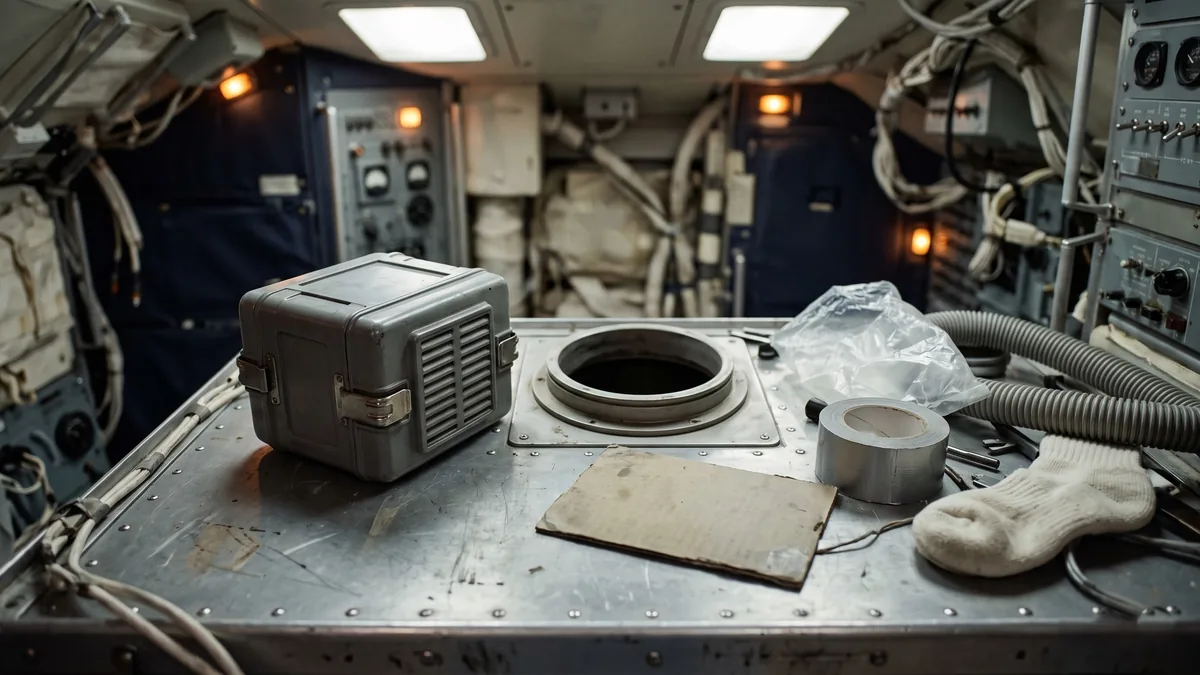
You have only what is on board. Pick what you would try.
This case is in the card above. Watch three more:
History is the setting. Thinking is the skill.
A student can write down the date of the Apollo 13 mission and the names of the crew.
Fewer can explain how engineers solved a problem with only what was on board.
Narravate Origins works in that gap. Students build reasoning by making a decision and defending it, before they know the outcome.
Each clip runs 30 to 35 seconds and stops at the moment of decision. In the session, the facilitator asks students what they would do, and why.
February 1962. John Glenn is ready to orbit the Earth. A new computer has worked out his flight path. Before he flies, he asks for one person to check it.
The case follows Kiran Mazumdar-Shaw’s journey from brewing qualifications to founding Biocon in 1978.
July 2023. Chandrayaan-3 lifts off from Sriharikota as the country watches. Its team designed the lander around one question: what if something goes wrong?
Questions about a sample? WhatsApp us on +91 90147 84878
Narravate Origins is a facilitated visual case session for colleges, universities and senior school students. Students step inside a documented decision from science, exploration, enterprise or sport. They see it through the eyes of the people who were there. Then they choose what they would have done, and explain why.
A short visual case, narrated live
The case stops at the decision point
Students choose and give their reasons
The outcome, then the debate
Every case comes from the public record. The script separates documented fact, reasonable inference and dramatic reconstruction.
Each case is labelled by the thinking skill it builds. Faculty can plan a series across a semester or term.
Explore thinking skills through documented decisions from science, exploration, and enterprise. Each session focuses on one skill, with the case and discussion adapted to the students’ level.
01
Students test a popular belief against the evidence, and ask why good evidence is sometimes ignored.
WHAT STUDENTS PRACTISE
EXAMPLE REAL-WORLD CASES
Katherine Johnson, 1962: an astronaut asks a mathematician to check the computer before he flies
John Snow and the Broad Street pump, 1854: a doctor maps a pattern and doubts the “bad air” theory
Rachel Carson, 1962: a biologist questions the claim that new pesticides are safe
02
Students work on a problem with limited resources, and check whether they are solving the right problem.
WHAT STUDENTS PRACTISE
EXAMPLE REAL-WORLD CASES
Apollo 13, 1970: fitting a square filter into a round hole with only what is on board
The Embrace infant warmer, 2007: Stanford students, including co-founder Jane Chen, find the real problem is villages without electricity
03
Students connect facts step by step and check whether a conclusion follows. They examine the assumptions behind an explanation.
WHAT STUDENTS PRACTISE
EXAMPLE REAL-WORLD CASES
Eratosthenes and Earth’s circumference: different shadows in two cities help a scholar estimate the size of Earth.
John Snow and the Broad Street pump, 1854: a doctor uses patterns in illness to investigate its source.
04
Students compare possible actions when information is incomplete. They weigh consequences and explain what would make them reconsider their choice.
WHAT STUDENTS PRACTISE
EXAMPLE REAL-WORLD CASES
Apollo 12, 1969: lightning disrupts the spacecraft’s electrical systems. The crew and flight controllers must respond before the mission can continue.
05
Students look beyond the first workable answer. They explore how an observation or an idea from another field could suggest a different approach.
WHAT STUDENTS PRACTISE
EXAMPLE REAL-WORLD CASES
Aravind Eye Care: an eye-care organisation draws inspiration from McDonald’s operating model to rethink how more patients could receive treatment.
George de Mestral and hook-and-loop fasteners: burrs clinging to clothing and animal fur inspire a reusable fastening system.
Selected cases also explore collaboration, resilience, and adaptability. Excellential agrees the focus with the institution before delivery.
Or a case linked to your course? Tell Excellential the programme, the subject and the skill, and the case will be built for your students.
The same case can serve both, with different questions. Excellential agrees the level, the case and the learning goal with the institution before delivery.
PRIMARY AUDIENCE
ALSO AVAILABLE
For schools, the format follows India’s National Education Policy 2020, which asks for experiential learning, including story-based pedagogy, within each subject.
Every Origins session runs live on Microsoft Teams and follows four stages. A whole class can join from one projector, or students can join from their own devices. Faculty are welcome to co-facilitate.
Step 1
The facilitator sets the scene. Students watch the case, reach the decision point and choose before seeing what happened.
Step 2
Students separate documented fact from interpretation and name the skill they just used.
Step 3
Students compare choices, challenge each other's evidence and hear how people at the time saw it differently.
Step 4
Each student names one way to use the same skill in their studies or daily life.
MEASURED, EVERY TIME
Excellential measures every learning intervention, so you can see whether students use the skill in their studies and work.
Level 4 (results for your institution) can be added in a custom proposal.
LEVEL 1
Reaction
Feedback on the session, shared in a short form at the end
LEVEL 2
Learning
Students explain a decision using evidence from the case
LEVEL 3
Behaviour
“What I have changed or am changing”, self-reported application after 30 days
WHO NARRATES EVERY CASE
Excellential’s facilitators narrate every Origins case and pause wherever students want to question the evidence. Students make the decisions.
Seasoned narrators
Experienced in holding a live online audience
Certified narration professionals
Formally certified narration professionals
Industry experts
Leaders who link each case to real work
Excellential shares fees in a written proposal after a free demo or consultation.
One thinking skill is explored through a documented visual case in a 60 to 90-minute session.
Several skills, one per session, spread across a semester or term.
A case linked to a course topic you choose, ready in two working weeks.
On request
45 minutes
Microsoft Teams
Vice-chancellors, IQAC coordinators, deans, principals and academic leads can book a free 45-minute demo for their management team. You experience the Apollo 13 case as your students would, reach the decision point and see how the discussion runs. Choose a date that suits your team, and the Teams link reaches you by email.
Built from the public record
Every script marks fact, inference and reconstruction
Sources shared first
The institution can review the source list before the session
Suitable by design
No war, religion or graphic scenes. Cases involving loss run for universities only
The format has run at scale. A large Indian conglomerate ran a series of 20 visual case sessions for its employees. Attendance grew by word of mouth from 60 people to 1,500 in a single session.
Narravate is built by Excellential, a Bengaluru-based leading HR consulting and learning and development partner.
85+ organisations served · 20,000+ professionals trained · 25+ years of HR and L&D practice
Students build critical thinking by practising it on real questions. They weigh evidence, compare points of view and defend a choice with reasons. Discussion and feedback help more than memorising answers. Narravate Origins gives students a documented decision from the past. They decide what they would have done before they know the outcome.
They are the skills students need beyond subject knowledge: critical thinking, problem solving, logical reasoning, decision making, creative thinking, collaboration, communication and adaptability. Many institutions also call them future-ready skills. Each Narravate Origins case is labelled by the skill it builds. Faculty can plan a series around the skills their students need most.
Recruiters look for graduates who can think through a problem, take a position and explain their reasoning. Group discussions and case interviews test exactly this. In every Origins session, students decide, defend their choice with evidence and respond when peers disagree. Faculty can plan a series of sessions before the placement season.
Students can now get a fluent answer to almost any question in seconds. The harder skill is judging whether that answer is right, complete and fair. The World Economic Forum’s Future of Jobs Report 2025 names analytical thinking as the top core skill employers look for.
Students engage when there is no answer to look up. Each Origins case stops at a real decision, with only the facts people had at the time. Students must choose and defend their reasoning before they see the outcome. Debating with peers keeps the whole class involved.
History is full of real decisions made with incomplete information. When students step inside one before learning the outcome, they practise reading evidence, weighing perspectives and reasoning about consequences. The same skills apply to research, news and career choices. That is why Narravate Origins uses the past as its setting.
Experiential learning means learning by doing and reflecting, instead of only listening. India’s National Education Policy 2020 names experiential learning, including story-based pedagogy, as standard practice within each subject. Narravate Origins applies it to one documented decision, a live discussion and a guided debrief.
It is a thinking-skills session. History is the setting. Each case is labelled by the skill it builds, such as critical thinking, problem solving, logical reasoning, decision making, creative thinking, resilience or adaptability. Students leave with a way of thinking they can use again in their studies and work.
Narravate Origins is designed first for college and university students, across undergraduate and postgraduate programmes. It also runs for Grades 10 to 12 in IB, ICSE and IGCSE schools. The case, vocabulary and discussion questions are adapted to each group, and faculty agree them in advance.
Students watch a short visual case, narrated live by seasoned narrators, certified narration professionals and industry experts. At the decision point, they choose what they would have done and explain why. They then compare evidence with classmates and see what happened. Each student names one way to use the same skill in their studies.
A session runs for 60 to 90 minutes, live on Microsoft Teams. A whole class can join from one projector in a lecture hall, or students can join from their own devices. Excellential confirms the timing, group size and learning goal with the institution before delivery.
Each case is built from documented sources. The script labels what is documented fact, what is reasonable inference and what is dramatic reconstruction. The source list is shared with the institution before the session. No case deals with war, religion or graphic scenes.
Excellential recreates events and cases using licensed generative AI, under human direction. A person checks every scene against the documented sources before any session. The narration is never AI. Seasoned narrators, certified narration professionals and industry experts narrate every case live. Students can pause and question the evidence at any point.
Yes. Share the programme, subject and topic. At university level, a case can open a module on research methods, ethics or decision making. For IB schools, it can start a Theory of Knowledge discussion. For Cambridge schools, it can support IGCSE Global Perspectives skills such as evaluating sources.
Vice-chancellors, deans, principals, IQAC coordinators, training and placement heads and academic leads can book a free 45-minute demo for their management team on Microsoft Teams. You experience the Apollo 13 case as students would, reach the decision point and see how the discussion runs. Book it through the form on this page.
Seasoned narrators, certified narration professionals and industry experts narrate every case live. Faculty are welcome to co-facilitate, add subject context or lead the follow-up discussion. The facilitator and faculty agree their roles, the session language and the technology needed before the day. Teachers in schools can take part the same way.
Students can build critical thinking, problem solving, logical reasoning, decision making and creative thinking. Each case is labelled by the skill it builds, and faculty choose the skill their students need most. Cases also touch related skills such as resilience and adaptability.
Disclaimer: Narravate cases are built for learning and discussion. Each real-world case draws on public, documented sources, which Excellential researches in depth before designing the visuals. The visuals are created with various tools and show reconstructions, not footage of the events. Company and brand names belong to their owners. Their use does not imply any endorsement of, or connection with, Excellential.
FREE DEMO FOR YOUR INSTITUTION
See how Narravate Origins works with your students
FREE LIVE DEMO
Experience a Narravate case before you book
