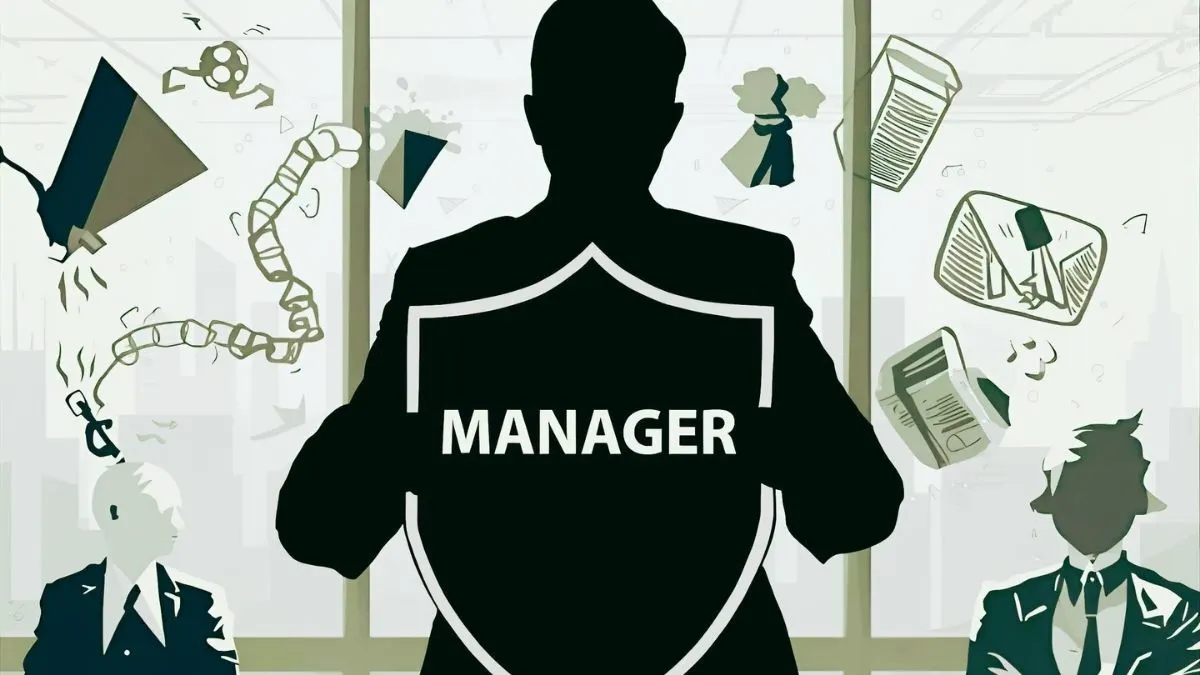
DELEGATION TRAINING FOR MANAGERS
Delegation training for managers that builds ownership, not dependency
Delegation training for managers teaches managers to hand over real work so that the decision, not just the task, transfers to the team. Done well, it builds genuine ownership below and frees the manager’s time for the leadership work only they can do.
Most managers in Indian organisations were promoted for being excellent at their work. Then they kept doing it. They hold on to tasks, review everything before it goes out, and wonder why their team waits to be told. The problem is rarely capacity. It is that no one taught them how to hand work over in a way that builds genuine ownership on the other side. This delegation training for managers does exactly that.
- Real work, not token tasks. Practical frameworks for delegating work that matters, and accountability that holds without you checking.
- Built for the Indian manager's reality. The older direct report, the team that waits to be told, the culture where polish is prized, and people fear owning a call.
- 25+ years of HR and L&D practice. 20,000+ professionals trained across 85+ organisations.
- Flexible delivery. In-person, virtual, or hybrid. English, Hindi, and regional languages on request.
Tell us about your team, and Excellential will build the program around the work your managers are struggling to let go of.









































KEY TAKEAWAYS
- Built for first-time managers still doing the work themselves, experienced managers avoiding delegation, and technical leads new to managing people.
- Excellential names five patterns: delegation avoided as a risk, the addictive "I'll just do it myself" reflex, tasks handed over without the decision, fear of owning a call, and delegation left inconsistent with no system behind it.
- The programme runs six modules: what to delegate and what to keep, delegating for ownership rather than completion, the handoff conversation, tracking without hovering, building a culture of ownership, and breaking the "do it myself" habit.
- In a related Excellential engagement, delegation success rose from 35 percent to 92 percent within three months, tracked through the linked life insurance case study.
- Before the programme, Excellential agrees what to measure with the organisation on an expectation-setting call, then follows up at 30 days on the specific handovers planned in the session.
- Each manager leaves having planned a specific handover to a specific person, with a date attached, not general notes on delegation.
Share which managers are the bottleneck and what work they’re holding onto, and Excellential will build the handoff practice around it.
THE PROBLEM
Why managers hold on to everything, and teams wait to be told
She works twelve-hour days. Her calendar is packed. Her team waits for her to review everything before it goes out. She has not taken a full day off in three months. She knows she should delegate more. She cannot bring herself to do it. “If I want it done right, I have to do it myself.”
Two desks away, a capable analyst waits for instructions that should have been his to decide. He has the skill. What he does not have is the authority or the confidence that the call is genuinely his to make. So he checks before every step, and his manager calls it “lack of initiative” without seeing that she trained it into him.
This is the most expensive pattern in Indian management, and it runs both ways. The manager who cannot let go ends up doing too much.
Excellential traces a related pattern in Why Your Best Performers Struggle as Managers.
The team that is never trusted to own anything ends up doing too little. One creates burnout at the top. The other creates passivity below. And they feed each other: the more the manager takes back, the less the team owns, which gives the manager more reason to take it back.
After 25+ years in Indian organisations, the same patterns show up in almost every team where delegation has broken down.

The patterns that Excellential sees across every team
After delivering delegation training across IT, BFSI, manufacturing, pharma, retail, and startups, the same five patterns surface with striking regularity.
1. Delegation feels like a risk, so it never happens
The fear of a wrong call keeps the work stuck.
“What if they make a mistake? What if quality drops? What if the client notices?” Managers promoted for being excellent doers find it physically uncomfortable to hand work to someone who will do it differently, and possibly worse at first. So they keep it, and the team never gets the reps that would make them reliable.
2. The "I'll just do it" reflex is addictive
Every task taken back deepens the habit.
Doing the work is faster, easier, and more satisfying than teaching someone else to do it. Every time the manager takes a task back, the habit deepens, the team learns to wait, and the workload climbs. It feels like diligence. It is the slow conversion of a leader into an overqualified individual contributor.
3. Managers hand the task over, but not the ownership
The work moves. The accountability does not.
Most “delegation” in Indian teams is really task-assignment: do this, by then, the way I would. The person executes without deciding, so the moment anything unexpected happens, it bounces straight back up. Real delegation transfers the decision, not just the task.
4. The fear of owning a call
Safer to ask, to wait, to route it upward.
In a hierarchy that prizes polish and rarely rewards a junior for overruling a senior, owning a decision feels dangerous. Teams learn that the cost of a wrong call is high and the reward for a right one is low, so they stop making calls at all.
5. There is no system, so it stays inconsistent and personal
Who owns what depends on mood, urgency, and who is nearest.
Delegation is ad hoc. Without a structured way to decide what to delegate, to whom, and at what level of authority, managers wing it every time, and the team can never predict what is theirs to own. The result is a team that asks before every step and a manager who is always the bottleneck.
What poor delegation costs you, quietly, every quarter
When managers do not delegate, their teams do not grow. The organisation pays a manager’s salary for work a junior should be doing, while the manager’s actual job, the thinking, the planning, the leading, goes undone. The best people leave first, because capable people do not stay where there is no autonomy and no room to grow.
Put an illustrative number on it. A senior manager on ₹40 lakh a year who spends even 40% of their time on work, a ₹12 lakh team member could own is roughly ₹16 lakh of salary a year spent on misallocated effort, for one manager. The rupee figure is illustrative; the pattern is not. Multiply it across a management layer, and the cost of “I’ll just do it myself” stops looking like diligence and starts looking like the most expensive habit in the building.
The deeper cost never shows on a dashboard: the decisions no one made because the team waited, the people who quietly disengaged because nothing was ever theirs, and the manager, too buried in execution to do the work only they can do.
The cost is not only individual. Research by Yale economist Michael Peters with Ufuk Akcigit and Harun Alp, published in the American Economic Review, found that weak managerial delegation keeps Indian firms small and accounts for roughly 11% of the income-per-capita gap between India and the United States. The reluctance to hand over real authority is not a personal quirk. It is a measurable drag on growth.
THE PROGRAMME
What this delegation training for managers covers
Excellential teaches delegation and ownership as one skill, because they are. Handing over a task without transferring accountability is just task assignment, and it changes nothing. Your managers learn structured frameworks, role-play real delegation conversations, and leave with a plan they can use in their first week back.
Module 1
What to delegate, and what never to
The delegation decision matrix: what to keep, what to hand over, what to stop doing entirely. How to match work to people by skill, development need, and capacity, and why the work that feels hardest to let go is usually the work that develops your team fastest.
Module 2
Delegating for ownership, not just completion
The difference between assigning a task and transferring accountability. How to hand over the decision, not just the action, so the work does not bounce back the moment something unexpected happens. Setting the level of authority explicitly.
Module 3
The handoff conversation
A repeatable structure for the conversation itself: the outcome, the boundaries, the authority level, the check-in rhythm, and what “done well” looks like. The clarity that makes a person confident enough to own the work rather than anxious enough to keep asking.
Module 4
Tracking without hovering
The right check-in frequency and the right questions, so you stay informed without taking ownership back through the side door. Why the manager who “just checks in constantly” is micromanaging in disguise, and how to hold accountability without holding the steering wheel.
Module 5
Building a culture of ownership
Moving a team from waiting-to-be-told to taking-the-call. How managers respond to a mistake made in good ownership versus one made through carelessness, and why that difference decides whether your team ever owns anything again.
Module 6
Breaking your own "do it myself" habit
Why the reflex forms, why it persists even when you know better, and the specific techniques for overriding it in the moment. Because understanding the pattern is step one. Breaking it under deadline pressure is the real work.
Want a detailed programme outline for your team?
Excellential will tailor the modules to your industry, team seniority, and the specific work your managers are handling.
OUR APPROACH
How does Excellential teach this
People do not learn to delegate by hearing about delegation. They learn by handing over real work, watching what happens, and adjusting. That principle shapes the whole programme.
Role plays, many of them
Managers practice the handoff conversation in realistic Indian workplace scenarios: delegating to someone more experienced, transferring a high-stakes task, and holding a check-in without taking over. They get coached feedback on their own delivery from the facilitator and their peers.
Their real situations, not hypotheticals
Each manager brings a task they should be delegating and a person they have been under-trusting. They plan and practice the actual handoff during the session, so they can execute it in the first week back, not translate a theory into their context later.
Built for the realities of the Indian team
Delegating to a direct report older than you. Giving a cautious person enough authority to act. Making it safe to own a call in a culture where polish is prized, and a wrong decision feels expensive. Excellential names these directly and works them into every scenario.
Measurement scoped to your objective
Excellential sets what it measures with you on an expectation-setting call before the programme. As standard, a 30-day follow-up checks whether the frameworks are in genuine use and troubleshoots what is not yet working. Where you want a deeper read, Excellential scopes it before it begins.
LEARNING OUTCOMES
What your managers will be able to do
By the end of the programme, every participant will be able to:
- Decide what to delegate, to whom, and at what level of authority, using a structured matrix rather than mood and urgency.
- Hand over the decision, not just the task, so accountability genuinely transfers.
- Run a handoff conversation that leaves the person clear, confident, and accountable.
- Set an explicit authority level so the person knows exactly what is theirs to own.
- Track progress without micromanaging, using the right rhythm and the right questions.
- Respond to a good-faith mistake in a way that keeps people willing to own decisions.
- Recognise the "I'll just do it myself" reflex as a pattern and override it under pressure.
- Move a team, over time, from waiting to be told toward taking the call.
- Make it safe to own a decision inside a hierarchy that quietly discourages it.
- Free their own time for the leadership work that only they can do.
RESULTS
What changes after this training
For the manager
- A structured approach to delegation that frees time for actual leadership work
- The confidence to hand over real work, not just token tasks
- Less burnout from carrying work that belongs to the team
- A team that takes the call instead of waiting to be told
- A repeatable system used weekly, not workshop notes that fade
For the organisation
- Faster team development and capability building
- A stronger internal talent pipeline as people grow through ownership
- Better decisions are made closer to the work, without bottlenecking upward
- Lower attrition from teams where people feel trusted and stretched
- Consistent management quality across teams and locations
Every task you hold on to is a development opportunity your team misses.
Free your managers’ time for the work only they can do, and build a team that owns its outcomes.
Excellential built similar ownership-focused capability in Reigniting Leadership Spark for a Life Insurance Giant, where delegation success rose from 35% to 92% in three months.
Testimonials
THE GAP
Why most delegation training never changes how managers work
Most delegation training teaches the theory, the matrix, the “letting go” pep talk, the case study, and then ends. Everyone agrees they should delegate more. Then they return to a real deadline, a team they are not sure they can trust, and a reflex that says it is faster if I just do it, and nothing changes. Knowing you should delegate is not the same as handing over a task that matters when the client is waiting, and the work carries your name.
The gap is not knowledge. It is an application under pressure and hierarchy. Drawing a delegation matrix in a workshop is easy. Transferring a real decision to a nervous junior the following Monday is hard, and that is exactly what a theory session cannot build.
Excellential explores this same knowing-doing gap in Leadership Development: What Actually Works (And Why Most Programs Fail).
Excellential closes the gap by working on real handovers during the programme and following up at 30 days to check they happened. The manager does not leave with notes about delegation. They leave having planned and practised a specific handover to a specific person, with a date attached.

WHY EXCELLENTIAL
Why organisations choose Excellential for delegation training for managers
You have options. Global course platforms, boutique trainers, and one-off workshops. Here is what makes working with us different.
Delegation and ownership are one skill, not two
Most programmes teach delegation as a time-management trick. Excellential teaches it as a way to build a team that owns its work, because handing over tasks without transferring accountability changes nothing, and Excellential has watched that fail for more than 2 decades.
Indian workplace realities, named directly
Delegating to someone older than you. Giving a cautious person enough authority to act. Making it safe to own a call in a culture that prizes polish and punishes the wrong decision. Excellential builds every scenario for the team your managers lead, not a Western template lightly adapted.
Practice-heavy, on real work
Role plays make up more than half the programme, working on tasks your managers are currently hoarding and people they are currently under-trusting. They leave with muscle memory and a dated plan, not memorised theory.
A 30-day follow-up, scoped to you
Excellential checks whether the frameworks are in real use and troubleshoot what is not yet sticking, and it agrees on how far to measure with you before the programme, not after.
25+ years of cross-industry practice
Built and refined within Indian organisations across IT, BFSI, manufacturing, retail, pharma, and startups. 20,000+ professionals trained, 85+ organisations served.
Startup-friendly, enterprise-ready
Whether you are training one team of first-time managers or a whole management layer, the programme scales without losing the practice time that makes it work.
DELIVERY
Format and delivery options
Every team has different constraints. Excellential adapts to your reality, not the other way around.
| Format | Duration | Best for |
|---|---|---|
| Two-day workshop | 2 full days, in-person | Full coverage with extensive role plays and real handover planning |
| Virtual programme | 4 half-day sessions over 2 weeks | Distributed teams apply each stage between sessions |
| One-day intensive | 1 day, in-person | Teams that need the core frameworks quickly |
| Custom format | Flexible | Built around your team's specific delegation and ownership gaps |
Excellential delivers across India, including Bengaluru, Mumbai, Delhi NCR, Hyderabad, Chennai, Pune, Gurugram, Noida, Kolkata, and Coimbatore. Virtual delivery reaches managers anywhere in India and abroad. English and Hindi are standard, with regional languages on request. Recommended batch size: 12 to 20 managers.
Not sure if this fits your managers?
Excellential will understand your context first and recommend the right approach. No hard sell.
WHO IS IT FOR
Built for managers whose teams depend on them too much
If your managers are the bottleneck and their teams never get real work, this is the programme.
First-time managers
Still doing the work instead of enabling the team, promoted for individual excellence and never taught to hand it over.
Experienced managers
Managers who know they should delegate and build ownership, but avoid both and feel the burnout of carrying their team’s work.
Technical and functional leads
Moving from an individual contributor to a people manager, whose instinct to do it themselves is now the bottleneck.
Managers in high-growth companies
Where team capability has to scale fast, and the manager-as-bottleneck is the first thing to break.
Any over-relied-on manager
Whose team is too dependent on them and too starved of the chance to do real work, at any level of seniority.
Where this sits among its programmes: this is Excellential’s most in-depth programme on delegation and ownership specifically. For the broader move into people management, see our First-Time Manager Training. For the appraisal cycle and rating conversations, see Excellential’s Performance Management Training. For high-stakes confrontations, see Its Managing Difficult Conversations Training.
Build managers who delegate real work, not token tasks
Your managers are talented, fast, and trusted, which is exactly why they hold on to the work and why their teams wait to be told. For one team or a whole management layer, Excellential will understand your context first and build the programme around the work your managers are struggling to let go of.
FAQS
Frequently asked questions
What is delegation training for managers?
Delegation training for managers helps managers hand over real work in a way that transfers accountability, not just tasks. It covers what to delegate and to whom, how to set the level of authority explicitly, how to run the handoff conversation, and how to track progress without micromanaging. Done well, it does two things at once: it frees the manager’s time for actual leadership work, and it builds a team that owns its outcomes instead of waiting to be told.
Is this the same as your first-time manager training?
Related but distinct. First-Time Manager covers the broad foundations, with delegation as one of several modules. This programme goes far deeper into delegation and ownership, specifically, with more practice and more complex scenarios. It works well as a follow-up for managers who have done the foundational programme.
Why "delegation and ownership," and not delegation on its own?
Because delegation without ownership is just task-assignment. The work moves, but the accountability stays with you, and it bounces straight back. The whole point of delegating well is that the person genuinely owns the outcome. We teach the two together because neither works alone.
Does "ownership" mean a mindset session for my team?
No. This is a programme for managers. Ownership here is something the manager builds in the team through how they delegate, set authority, and respond to mistakes. It is a leadership skill, not a motivational talk for employees.
Do you cover delegating to someone older or more senior than the manager?
Yes, and it is one of the most-requested scenarios. We work on the specific discomfort of handing authority to a more experienced direct report, which is one of the hardest delegation situations in Indian teams.
How is this different from managing difficult conversations?
That programme is about high-stakes confrontations: conflict, disagreement, and hard messages. This one is about handing over work and building accountability. Different skills, different situations. Many managers benefit from both, but they do not overlap.
My managers are not new. Will this still help?
Especially so. Experienced managers often have the most deeply set “I’ll just do it myself” habits, formed over the years. The programme gives them a structured reset and techniques that no one ever formally taught them.
Do managers practise, or is it slides?
They practise, repeatedly. More than half the programme is role play and real-handover planning. Each manager works on a task they are currently handling and leaves having rehearsed the actual conversation.
Can this be customised for senior managers?
Yes. For senior managers, we adjust the scenarios to delegating to other managers, handing over high-stakes work with real business risk, and building ownership across a layer rather than a single team.
How do you measure impact?
We scope measurement with you on an expectation-setting call because every team’s objective differs. As standard, a 30-day follow-up checks whether the frameworks are in genuine use. Where you want a deeper read, we agree on it before we begin.
What is the ideal batch size?
12 to 20 managers, for the right balance of practice time and peer feedback. We run multiple cohorts for larger groups.
How long is the programme?
A two-day in-person workshop for full coverage, a four-session virtual format over two weeks, or a one-day intensive for the core frameworks. We also build custom formats around your specific gaps.
Do you deliver in Hindi or regional languages?
English and Hindi are standard. Regional languages on request.