
By the time the company noticed her potential, a competitor had already.
The star a company forgot to grow
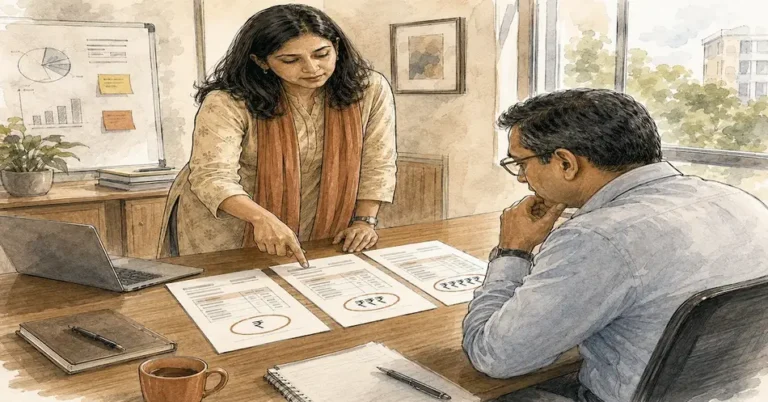
Divya Raghavan was the name that surfaced in every quarterly review at a fast-growing retail chain in Chennai. She ran a cluster of stores across Tamil Nadu, and her numbers led the region year after year.
- When a new store launch went sideways, the leadership sent Divya.
- When a difficult vendor needed handling, they sent Divya.
- When a junior team lost its way, people quietly suggested she mentor them. She did, on top of her own targets.
For four years, she carried more than her role asked. She grew her cluster’s revenue by close to ₹18 crore. She earned the top appraisal band every single cycle. And in those same four years, not one person sat down with her to talk about where she was going.
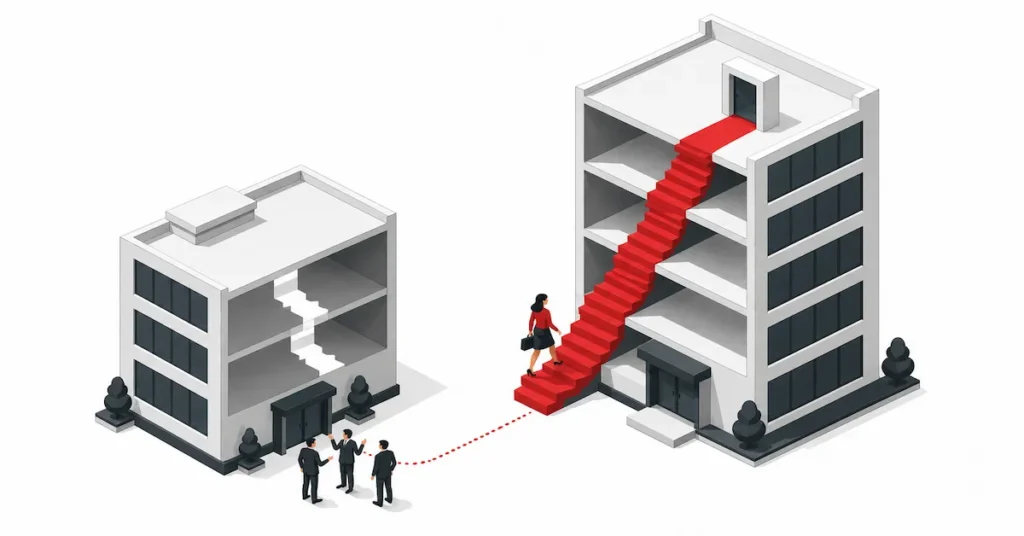
When she asked her manager about a larger role, the answer never changed. It was always warm and always the same: “You are far too valuable where you are.” The company read her excellence as a reason to keep her still. A competitor read the same excellence as a reason to build her up. They offered her a regional leadership role with a clear development path. It came with a mentor and a seat at the table where leaders made the decisions. She took it.
Six months later, her old company opened three new regions and discovered it had nobody ready to run them. The person who could have was now doing exactly that, for someone else.
Leadership readiness is the capacity to grow into roles someone does not yet hold. An organisation builds it deliberately in its high-potential people. It is distinct from how well they perform the role they have today.
Key takeaways• A high performer and a future leader are not the same person: one excels at today’s job, the other can grow into tomorrow’s. • Organisations often develop their strongest performers the least, because they depend on them where they are and resist moving them. • In India, tenure-based promotion, hierarchy and appraisal culture quietly mistake a top rating for genuine leadership potential. • The people who will lead you in three years are already on your payroll; readiness is the decision to develop them before a competitor does. |
The comfortable mistake almost every company makes
Divya’s story turns on a quiet confusion that sits inside most Indian organisations: the belief that a high performer and a future leader are the same person.
They are not. A high performer is excellent at the job she holds today. A future leader has the capacity to grow into a job she does not yet hold. The first is about present output. Leadership readiness is about future capacity, and the two need very different kinds of investment.
The cruellest part is that organisations often develop their strongest performers the least. Precisely because they are so good in their current seat, the organisation grows dependent on them there and resists moving them. The reward for excellence becomes a quiet sentence: stay exactly where you are, indefinitely. Meanwhile, the company invests its thin development budget on people already in senior roles and leaves its richest raw talent to grow on its own or leave.
Why this pattern runs so deep in India
Several habits common to Indian workplaces make this trap especially hard to escape.
Promotion still leans heavily on tenure. Many companies treat seniority as the natural queue for leadership. So, they ask a young high potential to wait her turn. Everyone assumes readiness arrives with years, not with deliberate development. Hierarchy reinforces it: fast-tracking a junior over longer-serving colleagues feels like a breach of harmony, so leaders avoid it.
Appraisal culture adds to the confusion. A bell curve sorts people by how well they performed last year. Many then mistake a top rating for proof of leadership potential. But a perfect score for running a region says nothing about whether someone can build and lead other regional heads. Rating measures the past. Readiness asks about the future.
And underneath it all sits a comforting assumption that good people will simply stay. They do not. SHRM’s 2025 CHRO research found that more than a third of chief HR officers (37 per cent) name developing succession plans as a serious challenge in their organisations (SHRM India). The talent gap is rarely a shortage of capable people. It is a shortage of capable people who were developed before someone else got to them.
What leadership readiness actually means
Leadership readiness is not a personality trait you are born with or a reward you earn after twenty years. It is a capacity that an organisation chooses to build. It does so deliberately and early, in the people who show signs of it.
Building it starts with learning to spot potential beneath performance. Beyond strong results, watch for the Three Tells of a future leader. The first is curiosity that outgrows the role. The second is the pull others feel towards them for guidance. The third is composure when a plan collapses. None of these show up on an appraisal form. Divya showed every one of them for four years, and nobody was looking.
It continues with stretch rather than stasis. People grow into leaders by taking on problems slightly larger than their current role, with support to work through them. A new market to open. A cross-functional project to steer. A chance to shadow a senior leader through a hard decision. None of this requires a promotion. All of it builds readiness. Excellential unpacks what separates real development from the theatre of it in Leadership Development: What Actually Works.
It also means a structured path rather than good intentions. A high-potential who can name the next two steps in her growth rarely answers a competitor’s call. She can see the company investing in her, and that is enough. A deliberate track for early-career leaders is exactly what our Emerging Leaders Program centres on, and it pays particular attention to the high-potential women companies most often overlook in the queue, the focus of our Women Leadership work.
And it means doing this before the vacancy appears, not after. Readiness built only when a senior leader resigns arrives a year too late. Excellential has walked organisations through this in advance, as our future-proof leadership pipeline case study shows. Excellential has also written about doing it for the Indian market. See How to Build a Leadership Pipeline in India.
The leaders are already on your payroll
Divya did not leave for money, and she did not leave because she was unhappy. She left because someone else offered her a future, and her own company had only ever offered her more of the present.
The people who will lead your organisation in three years are, in all likelihood, already working for you today, carrying more than their role demands and waiting for someone to see them as more than their current output. Leadership readiness is simply the decision to develop them while they are still yours to develop.
If your strongest people are growing everywhere except upward, it is worth asking who is preparing them, and whether a competitor is doing it better than you are.
Frequently asked questions
What is leadership readiness?
Leadership readiness is the capacity to grow into a role someone does not yet hold, rather than excellence in the role they have today. An organisation builds it deliberately and early through stretch assignments and structured development. It is not earned automatically through tenure or proven by a high appraisal score.
What is the difference between a high performer and a future leader?
A high performer excels at the job they hold today. A future leader has the capacity to grow into a job they do not yet hold. The first is about present output, the second about future capacity, and the two need very different kinds of investment to develop.
Why do companies lose their high-potential employees?
Often because excellence is rewarded with stasis. An organisation depends on a strong performer in their current seat and resists moving them, while development budget goes to those already senior. A competitor then offers the growth path their own company never did, and they leave.
How do you spot leadership potential beyond performance?
Look past results for three signals: curiosity that reaches beyond the current role, the pull colleagues feel towards a person for guidance, and how someone responds when a plan falls apart. These markers point to future capacity, which a strong appraisal rating on its own never measures.
When should a company start developing future leaders?
Long before any vacancy appears. Readiness built only when a senior leader resigns arrives roughly a year too late. Developing high-potential people while they are early in their careers, and still with you, is what turns a sudden gap into a planned succession rather than a scramble.